
 +86 18574103366
Most discussions about agricultural residue pelleting start with the machine. That is backwards. The machine is the simplest part of the chain. It sits in one place, runs on a schedule, and does what it is designed to do. The hard part happens before the material ever reaches the mill: collecting, handling, and storing corn stalks in a way that makes pelleting possible at all.
Corn stalks are bulky, seasonal, and scattered across fields. They arrive in a narrow harvest window and then sit for months. They absorb moisture when it rains and lose it when the sun returns. They are abrasive, uneven, and difficult to move. Every one of these characteristics shapes what kind of pelleting operation is realistic, what it costs, and whether it can run profitably.
This is why projects that focus only on equipment often fail. They buy a capable corn stalk pellet mill, install it, and then discover that they cannot feed it consistently. The material is too wet, too dry, too coarse, too inconsistent, or too expensive to gather. The machine works fine. The system around it does not.
This article looks at the parts of corn stalk pelleting that come before the mill. It covers collection logistics, storage, moisture management, material preparation, and the planning decisions that determine whether a project can actually run at capacity. The goal is not to explain what a pellet mill does. It is to explain what a pellet mill needs in order to do its job.
The Seasonal Problem With Corn Stalks
Corn stalks are available once a year. Harvest happens over a few weeks in most regions, and the residue is either baled immediately or left in the field. If it is left too long, it weathers, loses quality, and becomes harder to collect. If it is baled too wet, it molds in storage. Timing matters more than most people expect.
This seasonality creates a mismatch. A pelleting line can run year-round, but its feedstock arrives in a short window. That means the operation has to store enough material to last through the year, or accept that the line will run part-time. Both options have consequences.
Storing a year’s worth of stalks takes space. Round bales stacked outdoors lose quality at the edges and absorb moisture from the ground. Covered storage is better but costs money. Some operations compromise by storing bales in well-drained rows and accepting some loss. Others invest in sheds or tarps.
The alternative is to run the line only during and shortly after harvest. That reduces storage needs but limits annual output. For a farm that uses pellets on-site, seasonal production may be enough. For a commercial operation selling to a market, year-round supply is usually necessary to keep customers.
Collection Logistics and Cost
Collecting corn stalks is more expensive than most people assume. The baling itself is only part of the cost. There is also moving bales from the field to storage, loading and unloading, and eventually feeding them into the processing line.
Bale density matters. Denser bales are cheaper to transport per ton. But denser bales also require more powerful equipment to handle. The trade-off depends on distance and scale.
Field conditions affect collection. Wet fields make baling difficult and can damage soil. Some farmers avoid removing residue in wet years to protect soil structure. That reduces available feedstock.
Ownership is another issue. In many regions, corn stalks belong to the farmer who grows the corn. A pelleting operation that wants to use them has to negotiate access, either by buying the residue, renting the land, or contracting with the farmer. These arrangements take time and trust.
Transport distance is a major cost driver. Corn stalks are low in density, so moving them long distances is expensive. This is one reason pelleting is often done close to the source. A mill located near the fields has a cost advantage over one that relies on distant suppliers.
Drying: The Step Nobody Wants to Pay For
Moisture is the single biggest technical challenge in corn stalk pelleting. Stalks are usually baled at 15 to 20 percent moisture. Pelleting works best at around 12 to 15 percent, depending on the die and the material. That means most feedstock has to be dried before it can be processed.
Drying costs money. Rotary dryers consume fuel, whether that fuel is gas, biomass, or something else. The energy required depends on how much moisture has to be removed and how efficiently the dryer operates. Starting with drier material reduces drying cost, which is why storage and collection practices matter so much.
Some operations try to avoid drying by pelleting at higher moisture. That rarely works well. Wet material produces soft pellets, clogs dies, and can cause mold in storage. The short-term saving usually turns into a long-term problem.
Others try to dry in the field by leaving stalks longer before baling. This can work in dry climates, but it risks weather damage and quality loss. In humid regions, field drying is unreliable.
The practical approach is to design the system for realistic moisture, not ideal moisture. That means including drying capacity in the plan, and sizing it for the wettest material the operation is likely to receive.
Grinding and Particle Size
Corn stalks are long, tough, and fibrous. They have to be reduced in size before pelleting. A hammer mill is usually used for this step.
Particle size affects several things. Finer particles produce denser, more durable pellets. They also require more grinding energy and wear hammers faster. Coarser particles reduce grinding cost but produce weaker pellets.
The right particle size depends on the die, the moisture content, and the intended pellet quality. There is no single answer. Operators learn to adjust screen size and hammer configuration based on how the mill performs.
Grinding also affects the pelleting process itself. A consistent particle size helps the mill run smoothly. Inconsistent material causes surges and stalls, which increase wear and reduce output.
Dust is a side effect of grinding. Corn stalk dust is abrasive and can be a health hazard. Dust control systems, including cyclones and filters, are usually part of a well-designed line.
The Role of the Mill in a Broader System
The ring die corn stalk pellet mill for making biomass fuel pellets is the piece of equipment that turns prepared material into a finished product. But it only performs well when the material reaching it is consistent in moisture, particle size, and flow rate.
Ring die mills are usually preferred for biomass applications because they handle high volumes and produce more uniform pellets than flat die designs. They also tolerate the abrasive nature of corn stalks better, though die wear is still a major cost.
Die selection matters. Corn stalks require a compression ratio that balances pellet durability against energy consumption and die wear. Too much compression produces hard pellets but wears the die quickly. Too little produces soft pellets that crumble in handling.
The mill also has to be matched to the rest of the line. A mill that can produce two tons per hour is useless if the dryer can only prepare one ton per hour. Line balancing is one of the most common planning mistakes in biomass projects.
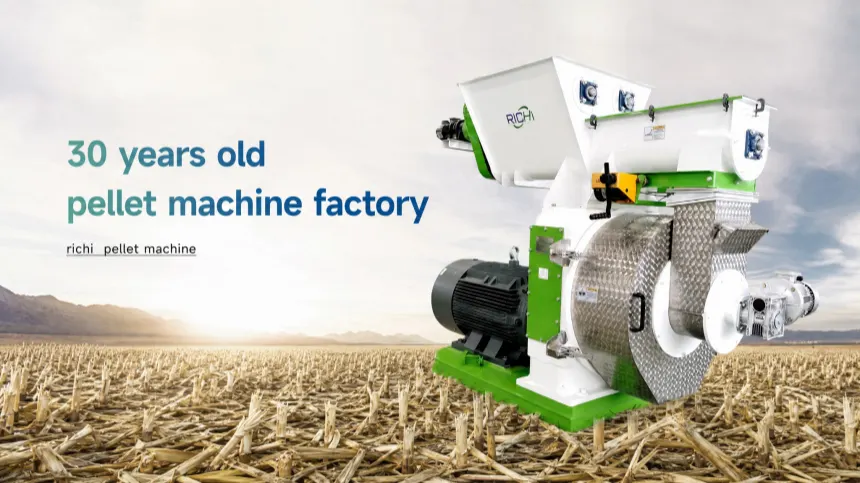
pellet making machine is a broad category that covers equipment for feed, biomass, and other applications. For projects that need a complete line rather than a single unit, reviewing how a supplier structures turnkey projects is a practical step. More detail is available through the supplier’s service information, and comparing equipment options before committing is always worth the time.
Storage and Handling of Finished Pellets
The pelleting process does not end when the pellet leaves the die. Fresh pellets are hot and soft. They have to be cooled before they can be stored or transported. A counterflow cooler is standard in commercial lines.
Cooling reduces temperature and moisture. If pellets are bagged hot, condensation forms inside the bag and mold develops. If they are stored in bulk while hot, the same problem occurs. Cooling is not optional.
After cooling, pellets are usually screened to remove fines. Fines can be recycled through the mill, which reduces waste. They can also be sold separately in some markets.
Storage for finished pellets should be dry and protected. Bulk silos work for large volumes. Bags work for smaller operations or for retail sales. In both cases, moisture is the enemy.
Handling equipment should be designed to minimize pellet breakage. Augers and conveyors can damage pellets if they run too fast or drop material too far. Gentle handling preserves pellet quality and reduces fines.
Economics and Scale
Corn stalk pelleting projects vary widely in scale. Small operations may produce a few hundred kilograms per hour for on-farm use. Large operations may produce several tons per hour for commercial sale.
Scale affects economics in several ways. Larger operations spread fixed costs over more output, which reduces the cost per ton. But larger operations also require more feedstock, more storage, and more capital.
Feedstock cost is often the largest single expense. If stalks are free or cheap, the economics improve. If they have to be purchased and transported long distances, the economics get harder.
Energy cost is the second major expense. Drying and pelleting both consume significant energy. Operations with access to cheap power or biomass fuel have an advantage.
Labor and maintenance are the third. Biomass pelleting wears equipment faster than feed pelleting. Dies, rollers, and hammers need regular replacement. Budgeting for these costs is essential.
Market price for the finished pellets determines revenue. Prices vary by region and application. Industrial buyers usually pay less than residential buyers but purchase larger volumes. Matching the product to the market is part of the planning.
Environmental Considerations
Corn stalk pelleting has environmental benefits, but those benefits depend on how the residue is sourced.
Removing residue from fields can reduce soil organic matter and increase erosion if too much is taken. Sustainable removal rates vary by soil, climate, and farming practice. A responsible project accounts for these limits.
Using residue for energy avoids burning, which improves air quality in many regions. It also provides an alternative to fossil fuels, which reduces greenhouse gas emissions.
Ash from corn stalk pellets is higher than from wood pellets. Ash disposal has to be managed, either through land application or other means. This is a practical issue that affects some markets more than others.
Common Planning Mistakes
Several mistakes appear repeatedly in corn stalk pelleting projects.
Underestimating moisture is the most common. Projects that do not plan adequate drying capacity cannot reach rated output.
Ignoring die wear is another. Corn stalks are abrasive. Dies wear faster than in feed applications. Budgets that assume feed-level die life are unrealistic.
Underestimating material handling is a third. Corn stalks are bulky and difficult to move. Conveyors, bins, and feeders have to be designed for the material.
Skipping market research is a fourth. Producing pellets is not the same as selling them. Projects that do not understand their market end up with inventory they cannot move.
Overbuilding is a fifth. Larger is not always better. A line that is too big for the available feedstock will run below capacity and lose money.
What a Realistic Project Looks Like
A realistic corn stalk pelleting project starts with feedstock, not equipment. It confirms that enough material can be collected at acceptable cost. It plans storage and drying for real-world moisture conditions. It selects a mill and die matched to the material. It budgets for wear parts and maintenance. It identifies a market before production begins.
The equipment is important, but it is not the starting point. The starting point is the material and the system that delivers it to the mill.
For projects that want to evaluate the full range of equipment options before committing, the biomass pellet machine page is a useful reference: https://pelletmakermachine.com/biomass-pellet-machine/
Looking Ahead
Interest in agricultural residue pelleting continues to grow. Corn stalks are one of the most abundant residues available, and pelleting offers a way to turn them into a product with real value.
The technology is established. The equipment is available. What separates successful projects from unsuccessful ones is planning. Material supply, moisture control, storage, die selection, maintenance, and market access all have to be addressed before the first pellet is made.
For farmers and project developers willing to do that work, corn stalk pelleting can be a practical addition to an agricultural operation. For those who skip the planning, the machine will sit idle while the problems pile up around it.