
 +86 18574103366
Biomass pellets are increasingly discussed as a practical way to turn agricultural residues, forestry by-products, and other renewable materials into a more manageable solid fuel. Compared with loose biomass, pellets are easier to store, transport, meter, and use in many heating systems. However, producing stable pellets is not simply a matter of pressing raw materials through a pellet mill. The entire process, from raw material preparation to final storage, affects pellet quality.
This raises an important question for anyone studying biomass fuel production: what does a modern pellet manufacturing process actually involve?
The answer depends on the type of biomass being processed, its moisture content, particle size, fiber structure, ash content, and the intended application of the final pellets. A small operation using relatively dry sawdust may require only a few major processing steps, while a larger industrial project handling agricultural residues may need a much more complete system.
Understanding these differences is useful before discussing equipment capacity, investment, or plant layout.
What Raw Materials Can Be Used for Biomass Pellets?
The first consideration is usually the raw material. Biomass pellets can be made from many types of plant-based residues, but not every material behaves in the same way during pelletizing.
Common raw materials include sawdust, wood chips, forestry residues, rice husks, wheat straw, corn stalks, cotton stalks, sunflower husks, bamboo residues, and other agricultural by-products. Some materials contain relatively high amounts of natural lignin, which can help particles bind together under pressure and heat.
Other materials have different characteristics. Rice husk, for example, contains a relatively high proportion of silica and tends to produce more ash than many wood residues. Straw can also have different ash characteristics depending on its source and harvesting conditions.
For this reason, raw material selection should not be based only on availability. A material that is inexpensive at the collection point may require additional crushing, drying, cleaning, or conditioning before it can be pelletized efficiently.
The intended fuel market is also important. Pellets for residential heating may have different quality requirements from industrial biomass fuel. Industrial users may place greater emphasis on price and energy content, while smaller heating systems can be more sensitive to ash formation, pellet durability, and combustion behavior.
Why Is Moisture So Important?
Moisture is one of the most important variables in pellet production.
If biomass contains too much water, it may be difficult to compress effectively. Excess moisture can also increase the energy required for drying and reduce the useful energy content of the finished fuel.
On the other hand, material that is excessively dry may not form strong pellets under certain processing conditions. Moisture helps influence the physical behavior of biomass during compression, so the goal is not simply to remove as much water as possible.
The appropriate moisture range depends on the feedstock and pelletizing system. Wood residues, agricultural residues, and mixed biomass materials may require different treatment conditions.
For this reason, moisture should normally be measured rather than estimated by appearance. Two piles of biomass may look similar while having noticeably different moisture levels.
A moisture meter and basic laboratory testing can therefore be useful during the planning stage. Once the characteristics of the raw material are understood, the drying system can be designed around realistic operating conditions rather than assumptions.
What Happens Before the Biomass Reaches the Pellet Mill?
Raw biomass usually needs some degree of preparation before pelletizing.
Large wood pieces may need to be chipped or crushed. Agricultural residues may need cutting or shredding. Foreign materials such as stones, metal, or soil should also be removed because they can damage processing equipment.
After initial size reduction, a hammer mill or another suitable grinding machine may be used to achieve a more consistent particle size. Uniform particles help create a more stable material flow and can contribute to better pellet formation.
Particle size is particularly important because very large particles may not compress evenly. Extremely fine material, however, is not automatically better. Excessive grinding can increase electricity consumption without producing a proportional improvement in pellet quality.
The ideal particle size therefore depends on the raw material, pellet diameter, equipment design, and final application.
How Does Drying Fit Into the Process?
When raw biomass has a moisture content above the suitable range for pelletizing, drying becomes a critical step.
Industrial biomass drying systems commonly use hot air to reduce moisture before the material enters the pelletizing section. Depending on the project, heat may come from a dedicated furnace, biomass combustion system, or another heat source.
The objective is to achieve consistent moisture rather than simply maximizing drying intensity.
Uneven drying can create problems later in the process. If some material remains too wet while other material becomes excessively dry, the pellet mill may receive an inconsistent feedstock. This can influence production stability and final pellet density.
Dryer selection therefore needs to consider raw material moisture, required production capacity, available heat sources, local climate, and energy efficiency.
For smaller projects, naturally dried raw materials may sometimes reduce the need for intensive mechanical drying. For larger operations or regions with humid conditions, however, a dedicated drying system may be necessary.
What Is the Role of a Biomass Pellet Manufacturing Plant?
Once the raw material has been prepared and brought into a suitable condition, it can enter the main pelletizing stage.
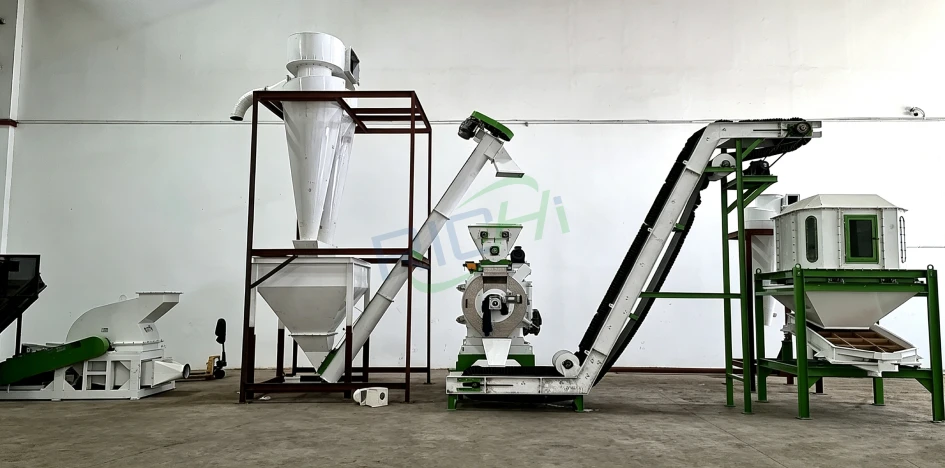
A biomass pellet manufacturing plant generally combines several processing functions rather than relying on a single machine. Depending on the raw material and capacity, the system may include feeding, crushing, grinding, drying, pelletizing, cooling, screening, conveying, and packaging equipment.
This integrated approach is important because each stage affects the next one.
For example, an inefficient grinding stage may create oversized particles. An unstable drying system may produce inconsistent moisture. Poor feeding can cause fluctuations in pellet mill loading. Insufficient cooling can make freshly produced pellets more vulnerable to deformation or breakage during storage.
Therefore, it is more useful to view pellet production as a continuous material flow rather than a collection of independent machines.
The design of the system should begin with the characteristics of the raw material and the expected production requirements. Equipment should then be selected to match those conditions.
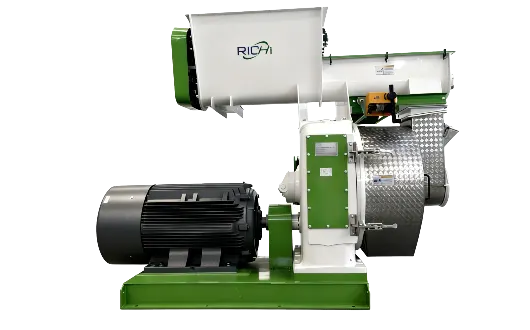
How Does the Pellet Mill Actually Form Pellets?
Pelletizing is the stage most people associate with biomass fuel production.
Inside a pellet mill, prepared biomass is compressed through holes in a die. The combination of pressure, friction, heat, and the natural binding properties of the material causes loose particles to form continuous compacted strands.
These strands are then cut into pellets of the desired length.
The diameter of the pellets is determined largely by the die configuration. Common fuel pellet diameters include several millimeter sizes, with the appropriate specification depending on the combustion equipment and market requirements.
The pellet mill must also be operated within a suitable load range. Feeding too much material can overload the machine, while feeding too little can reduce production efficiency.
Different biomass materials can also behave very differently under compression. A setting that works well for softwood sawdust may not produce the same result with rice husk or straw.
This is why pelletizing conditions are normally established through testing rather than copied directly from another material.
What Should You Consider When Choosing a Rice Husk Pellet Mill?
Rice husk deserves special attention because its physical and chemical characteristics differ from many wood-based materials.
Anyone researching how to choose rice husk pellet mill equipment should first examine the properties of the available husk. Moisture, ash content, particle size, bulk density, contamination level, and expected production volume all influence equipment selection.
The abrasive characteristics associated with rice husk can also affect wear on processing components. Equipment intended for long-term operation therefore needs to be matched to the material rather than selected solely according to nominal capacity.
Another consideration is the intended pellet diameter. The required die configuration should correspond with the combustion system or downstream application.
Power consumption is also worth examining. A machine with a high nominal output is not necessarily the most economical choice if the actual operating conditions cause excessive electricity consumption, frequent maintenance, or unstable production.
It is often more useful to compare equipment according to actual throughput, energy use, maintenance requirements, wear parts, and expected operating conditions.
Why Is Cooling Necessary After Pelletizing?
Fresh pellets leave the pellet mill at an elevated temperature and may contain internal stresses created during compression.
Cooling allows the pellets to stabilize before handling and storage. A counterflow cooler is commonly used in larger systems because it can gradually reduce pellet temperature while helping remove residual moisture.
Cooling is more than a temperature-control step. It also contributes to pellet durability.
If hot pellets are transferred directly into bags or storage areas without adequate cooling, condensation and moisture migration may become problems. This can negatively affect storage stability.
After cooling, pellets may pass through a screening system. Broken pellets and excessive fines can be separated from the finished product and, depending on the system, returned to the production process.
The result is a cleaner and more uniform final fuel stream.
How Should Finished Pellets Be Stored?
Storage is sometimes overlooked during plant planning, even though poor storage conditions can reduce the quality of otherwise well-produced pellets.
Pellets should generally be protected from rain, groundwater, and excessive humidity. A suitable warehouse should minimize direct contact with moisture and provide adequate ventilation.
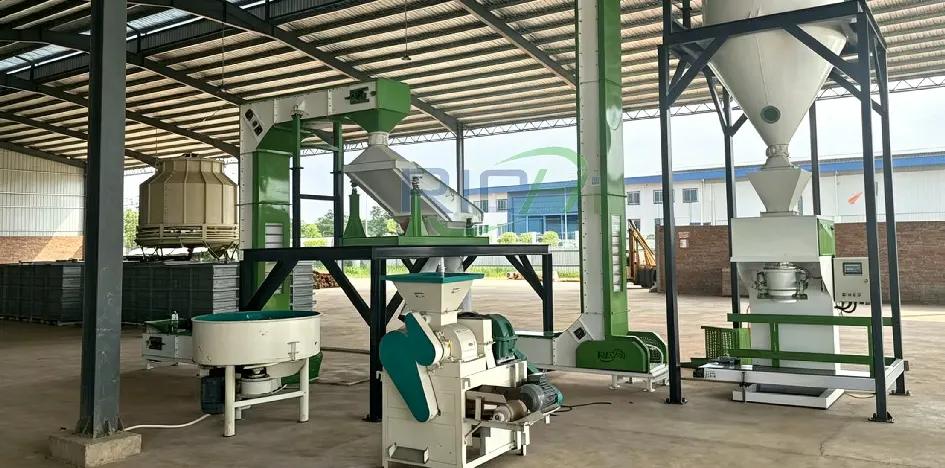
Bulk storage and bagged storage have different requirements. Large industrial users may use silos, bunkers, or bulk transport systems, while smaller producers may package pellets in bags.
The storage method should also reflect the expected turnover rate. If pellets are produced and consumed quickly, the storage system may be relatively simple. Long-term storage requires greater attention to moisture protection, airflow, and material handling.
Dust management is another consideration. Pellet handling can generate fine particles, particularly around transfer points, screens, and packaging equipment. Industrial facilities should therefore consider dust collection and appropriate workplace safety measures during layout design.
Does Every Project Need the Same Production Line?
No. One of the most common misunderstandings is that biomass pellet production follows a universal equipment configuration.
In reality, the process can vary considerably.
A facility processing clean, dry sawdust may need a grinder, pellet mill, cooler, screening system, and packaging equipment. A project using freshly collected agricultural residues may require additional shredding and drying stages.
Capacity also changes the design. A small workshop does not necessarily require the same conveying, storage, automation, and dust-control systems as a large industrial facility.
The availability of raw materials should also influence the plant layout. If biomass is collected from several locations, raw material receiving and storage may represent a significant part of the project.
In contrast, a facility located next to a sawmill may have a more stable supply of relatively uniform sawdust.
These differences explain why equipment specifications should be considered together with local raw material conditions.
What Factors Affect Pellet Production Costs?
The cost of producing biomass pellets includes much more than the price of the pellet mill.
Raw material transportation can be significant, especially when biomass has a low bulk density before processing. Drying can also consume substantial energy when the incoming material has high moisture.
Electricity consumption is another operating cost. Crushers, hammer mills, pellet mills, fans, conveyors, and dust collectors all contribute to total energy use.
Maintenance should also be included in long-term calculations. Dies, rollers, screens, bearings, hammers, and other wear components have finite service lives.
Labor requirements depend on the degree of automation and plant size. A highly automated facility may require fewer operators but generally involves greater initial investment and more sophisticated control systems.
Finally, storage and packaging can influence the economics of the finished product. Producing pellets efficiently is only one part of the overall business model.
Related Post: https://commercialpelletmill.com/wood-pellet-making-machine-price/
Is Automation Necessary?
Automation is not always essential for a small biomass operation, but it becomes increasingly useful as capacity grows.
A basic control system can monitor motor loads, temperatures, material levels, and other operating parameters. More advanced systems can coordinate multiple processing stages and reduce manual intervention.
Automation can also improve process consistency. For example, automatic feeding can help maintain a more stable pellet mill load, while temperature sensors can help operators monitor drying and cooling conditions.
However, automation should be matched to the actual needs of the facility. Installing complicated control systems without sufficient technical support may create unnecessary complexity.
The most practical approach is generally to automate processes where stable control has a clear operational benefit.
How Can Pellet Quality Be Evaluated?
Pellet quality can be assessed through several physical and chemical indicators.
Durability is important because pellets that break easily can create excessive fines during transport. Bulk density influences storage and transportation efficiency. Moisture affects both handling and combustion.
Ash content is especially relevant for agricultural residues. Materials with high mineral content can produce more ash during combustion and may require more frequent cleaning of combustion equipment.
The energy value of the pellets is another important parameter. It depends on the raw material and moisture content.
For industrial applications, laboratory testing can provide more reliable information than visual inspection alone. Producers can establish internal quality standards based on the requirements of their customers and combustion systems.
What Should Be Considered Before Building a New Facility?
Before construction begins, several questions should be answered.
First, what biomass is available throughout the year? Seasonal availability can have a major influence on plant utilization.
Second, what is the average moisture content? This determines whether drying equipment is needed and affects energy consumption.
Third, what production capacity is actually required? Selecting a machine based only on a theoretical maximum may result in an oversized or underutilized system.
Fourth, where will the finished pellets go? Local heating markets, industrial boilers, power generation, and export markets can have different quality and packaging requirements.
Fifth, how will raw materials and finished products be transported? Site access, warehouse capacity, truck movement, and material handling should be considered before equipment placement is finalized.
These questions help transform a general pellet-production idea into a more realistic process design.
Can Agricultural Waste Become a Useful Fuel?
One of the interesting aspects of biomass pellet production is its ability to give agricultural residues another use.
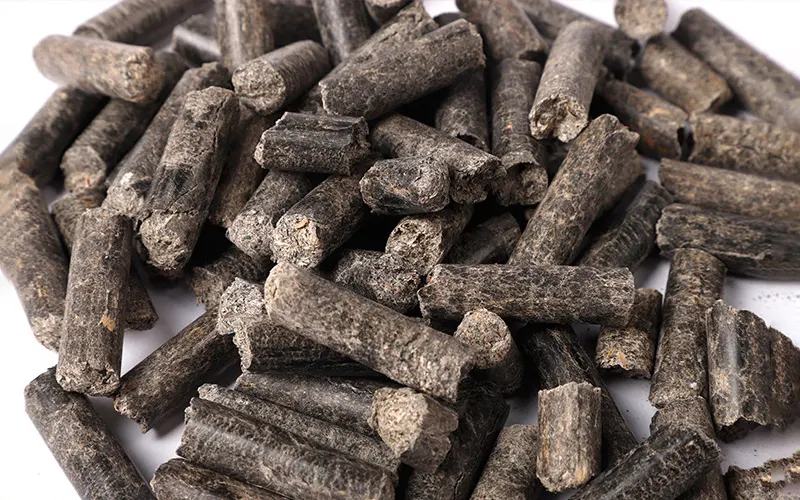
Materials such as rice husk, corn residues, straw, and various crop-processing by-products may otherwise have limited economic value. Converting them into pellets can improve their bulk density and make them easier to transport and feed into combustion equipment.
However, this does not mean every agricultural residue should automatically be pelletized.
Collection costs, contamination, moisture, ash content, seasonal availability, and local demand all matter. In some cases, transportation costs can make a seemingly inexpensive raw material less practical.
The environmental value should also be considered in context. Biomass is renewable when managed sustainably, but processing still consumes electricity and heat. Transportation and combustion also have environmental impacts.
A useful assessment therefore looks at the complete material cycle rather than assuming that all biomass pellets have the same environmental profile.
How Should Equipment Suppliers Be Evaluated?
When comparing equipment suppliers, it is useful to look beyond machine appearance or advertised capacity.
Technical documentation should explain the recommended raw materials, operating conditions, power requirements, capacity range, and wear components.
It is also worth asking whether the supplier has experience with the specific biomass being considered. Equipment designed for wood residues may require different configurations when processing rice husk, straw, or other agricultural materials.
For project planning, companies such as wood pellet mill may provide technical information about biomass processing equipment and complete pellet production systems. However, equipment selection should still be based on the actual characteristics of the project rather than on a general equipment list.
Testing is particularly useful when the raw material is unfamiliar. A sample can be processed to evaluate grinding behavior, moisture requirements, pellet formation, durability, and energy consumption.
This type of practical information is often more valuable than relying only on theoretical specifications.
What Is the Future of Biomass Pellet Production?
The development of biomass pellet technology is likely to remain closely connected with broader questions about agricultural waste management, renewable energy, industrial heat, and resource efficiency.
Future facilities may place greater emphasis on energy efficiency, automated process control, heat recovery, improved dust management, and more precise quality monitoring.
Another important trend is the use of locally available residues. Instead of relying on one universal feedstock, some facilities may be designed around regional biomass resources and seasonal material availability.
Digital monitoring may also make it easier to track moisture, production rates, energy consumption, and equipment performance.
Nevertheless, the fundamental principle remains relatively simple: good pellets begin with suitable raw materials and a process designed around their characteristics.
Final Thoughts
Producing biomass pellets involves much more than compressing loose plant material. Raw material preparation, moisture control, particle size, pelletizing conditions, cooling, screening, storage, and transportation all influence the final result.
The right system therefore depends on the material available, the required capacity, the target pellet specifications, local energy costs, and the intended end use.
For anyone considering a new project, the most useful starting point is not a particular machine model. It is a clear understanding of the raw material and the complete process. Once those factors are defined, equipment selection and plant layout become much easier to evaluate.
A well-designed pellet production system should ultimately balance product quality, energy consumption, equipment durability, operational stability, and the practical availability of biomass. That approach provides a more reliable foundation for turning agricultural and forestry residues into a usable solid fuel.