
 +86 18574103366
Cotton farming produces large quantities of stalks after the cotton harvest. In many agricultural regions, these residues have limited direct uses and can be difficult to transport because of their low bulk density. Pelletizing provides one method of converting prepared cotton stalks into a more compact biomass fuel.
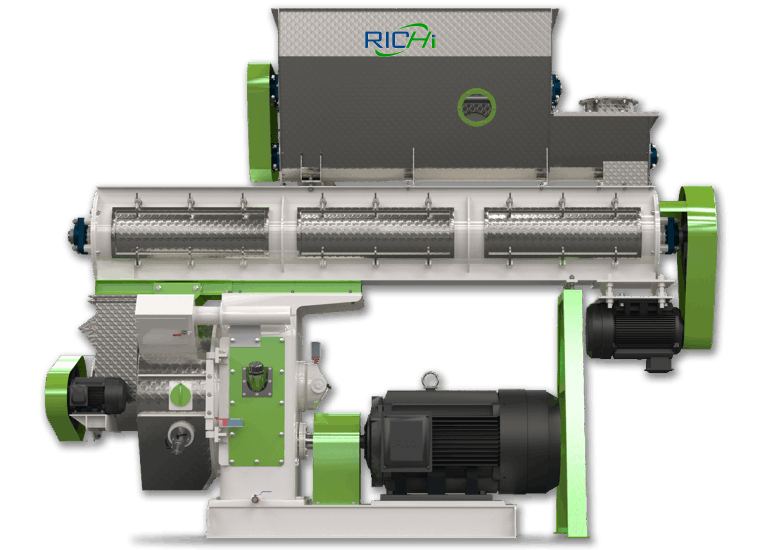
A cotton stalk pellet machine compresses processed cotton stalk particles through a die to form cylindrical pellets. The complete process, however, normally begins several steps before the pellet mill.
What Happens to Cotton Stalks After Harvest?
Cotton stalks can contain stems, branches, leaves, and other field residues. Their physical condition depends on harvesting methods and storage conditions.
Long stalks are generally unsuitable for direct feeding into a pellet mill. They need to be cut or crushed into smaller pieces first.
The raw material should also be checked for stones, soil, metal, and other foreign matter collected during harvesting or transportation.
Cleaning the material before size reduction helps protect downstream equipment.
Why Is Size Reduction Necessary?
A pellet mill requires relatively uniform feedstock.
Cotton stalks can be fibrous and relatively long, so a cutting or crushing stage helps prepare them for further processing. A hammer mill can then reduce the material to a more suitable particle size.
The objective is not simply to produce the finest possible powder. Excessive grinding can consume additional electricity without providing a corresponding production benefit.
The appropriate particle size depends on the pellet diameter, material characteristics, and pelletizing equipment.
Does Cotton Stalk Need Drying?
Moisture is one of the main factors affecting biomass pellet production.
If harvested cotton stalks contain excessive moisture, the material may need to pass through a drying stage before pelletizing. Material that has already been properly dried may require little or no additional drying.
The actual moisture level should be measured rather than estimated from appearance.
A dryer can increase project cost and energy consumption, so it should be included only when the raw material requires it.
How Are the Pellets Formed?
Once the cotton stalk particles reach the appropriate condition, they are fed into the pellet mill.
Inside the compression chamber, rollers force the material through holes in the die. Pressure and friction generate heat, allowing the biomass particles to form compact pellets.
The die determines the approximate pellet diameter.
A 5T/H straw pellet mill operates on the same basic compression principle and belongs to the same broad category of biomass pelletizing equipment. However, straw and cotton stalks have different fiber structures and processing characteristics, so the operating parameters should not automatically be copied from one material to another.
What Determines Pellet Quality?
Several factors influence the finished pellets:
- Raw-material moisture
- Particle size
- Biomass composition
- Die specification
- Compression conditions
- Feeding stability
- Cooling efficiency
A stable feedstock generally makes it easier to maintain consistent pellet formation.
If moisture varies significantly between batches, the production operator may need to adjust the process accordingly.
Why Is Cooling Necessary?
Fresh pellets leave the compression chamber at an elevated temperature.
Cooling brings the pellets closer to ambient conditions and improves their handling stability. It also prepares them for screening and storage.
The screening machine removes fines and broken pellets. Depending on the production process, suitable fines can be returned to the pelletizing stage.
For commercial plants, continuous cooling and screening can be integrated with conveyors to maintain steady production.
Can Cotton Stalk Pellets Be Stored?
Yes, but storage conditions matter.
Biomass pellets should be protected from rain, condensation, and excessive humidity. Exposure to moisture can weaken the pellets and reduce their suitability as fuel.
For long-distance transportation, producers may use bags, bulk systems, or other packaging according to customer requirements.
A dry warehouse with controlled material handling can help maintain the condition of the finished product.
What Equipment Is Required?
A basic cotton-stalk pellet process may include:
Cotton Stalk → Cutting → Crushing → Drying if Required → Pelletizing → Cooling → Screening → Packing
Additional conveyors, storage bins, dust collection, and automatic packing equipment can be added for larger projects.
A small agricultural operation may use a relatively simple layout, while a commercial biomass factory can integrate automated material handling and centralized controls.
How Should the Machine Be Selected?
Buyers should provide information about the cotton stalk’s moisture, particle condition, daily availability, desired pellet diameter, production target, electricity specification, and expected operating hours.
The pellet press should then be selected according to the complete production requirement rather than motor power alone.
Testing representative cotton stalk samples can help determine whether additional cutting, crushing, or drying equipment is required.
The goal is to build a production system in which every stage keeps pace with the pellet mill. A crusher that is too small can restrict production, while an oversized dryer may unnecessarily increase energy consumption.
Cotton stalk pellet production is therefore primarily a matter of matching the raw material with the correct preparation and compression process. With appropriate size reduction, moisture control, pelletizing, cooling, and storage, agricultural cotton residues can be converted into a denser and easier-to-handle biomass fuel. For further information about cotton stalk processing and biomass pellet systems, read more.
Related Post: https://pelletizerequipment.com/rdf-pellet-mill/