
 +86 18574103366
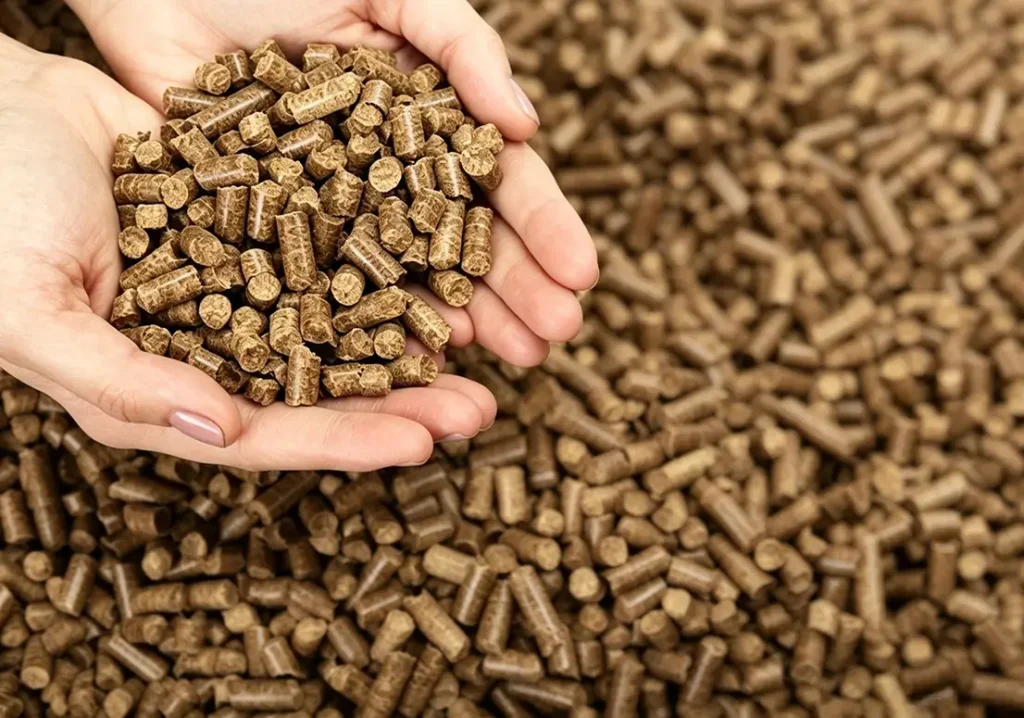
The palm oil industry generates a large amount of biomass waste during harvesting and processing. One of the most important types is Empty Fruit Bunches, commonly known as EFB. After palm fruits are removed at the palm oil mill, large quantities of fibrous empty fruit bunches remain.
For palm oil producers, EFB can represent both a disposal challenge and a potential source of renewable energy. Instead of treating these materials simply as waste, modern biomass processing technology can convert them into dense fuel pellets that are easier to store, transport, handle, and utilize.
EFB pelletizing is a practical way to increase the energy density and usability of palm biomass. Through processes such as shredding, crushing, drying, pelletizing, cooling, screening, and packaging, loose EFB fibers can be transformed into standardized biomass fuel.
An EFB pellet machine is the core equipment used to compress prepared EFB material into dense cylindrical pellets. However, successful EFB pellet production requires more than a pellet mill alone. Moisture control, fiber size, drying, feeding, die selection, cooling, and screening all influence the final pellet quality.
This article explains how EFB pelletizing works, why EFB is suitable for fuel production, what equipment is required, and how palm waste can be transformed into a commercially useful biomass fuel.
What Is EFB?
EFB stands for Empty Fruit Bunch.
It is the fibrous bunch structure left after palm fruits have been removed during palm oil processing.
Palm oil mills process large quantities of fresh fruit bunches. After sterilization and fruit separation, the empty bunches remain as a fibrous biomass material.
EFB typically contains:
- Fibrous material
- Cellulose
- Hemicellulose
- Lignin
- Residual moisture
- Small amounts of minerals and other components
Its exact physical and chemical characteristics depend on palm variety, processing conditions, storage time, moisture content, and other factors.
Because EFB is generated in large volumes near palm oil mills, it can be an attractive feedstock for biomass fuel production when an appropriate processing system is available.
Why Is EFB Considered a Waste Problem?
Palm oil mills can generate significant quantities of biomass residues.
If EFB is not effectively managed, several practical problems can occur.
Loose EFB occupies a large amount of storage space because of its low bulk density.
It can also be difficult to transport economically over long distances.
Depending on local conditions, uncontrolled accumulation can create additional management challenges.
Therefore, palm oil producers have an incentive to find productive uses for EFB.
One solution is to convert it into fuel pellets.
How EFB Becomes Useful Fuel
The basic EFB pelletizing process can be summarized as:
EFB Collection → Size Reduction → Crushing → Drying → Fine Grinding → Pelletizing → Cooling → Screening → Packaging
Each stage has a specific purpose.
The goal is to transform bulky, irregular, high-moisture biomass into a dense, standardized fuel product.
Pelletizing significantly changes the physical characteristics of EFB.
Loose EFB fibers are difficult to handle because they have a low bulk density and irregular shape.
After compression, the resulting pellets are much more compact and uniform.
This makes them easier to:
- Store
- Transport
- Feed into combustion systems
- Measure
- Package
- Trade
Step 1 EFB Collection and Preparation
The first stage is collecting EFB from the palm oil mill.
Fresh EFB may contain relatively high moisture and may also include unwanted materials.
Before entering the pellet production line, the feedstock should be inspected and prepared.
Preparation may include:
- Removing foreign materials
- Separating unsuitable contaminants
- Controlling storage conditions
- Breaking large bunch structures
- Regulating material feeding
Consistent feedstock preparation helps protect downstream equipment and improves production stability.
Step 2 EFB Size Reduction
Fresh EFB consists of large and irregular fibrous structures.
These materials cannot normally be fed directly into a pellet mill.
The first mechanical step is therefore size reduction.
A shredder, bale breaker, cutter, or similar machine can reduce the EFB into smaller pieces.
The objective is to create a more manageable feedstock for subsequent crushing and drying.
Uniform material size also improves feeding stability.
Step 3 EFB Crushing
After initial size reduction, EFB may require further crushing.
A biomass crusher or hammer mill can reduce the material into smaller particles.
The appropriate particle size depends on:
- Pellet diameter
- Pellet mill design
- Raw material characteristics
- Moisture content
- Required pellet quality
Excessively large fibers may make pellet formation difficult.
At the same time, unnecessarily fine grinding can increase electricity consumption.
Therefore, the crushing process should be optimized according to the complete pelletizing system.
Why Fiber Size Matters
Particle size is important because the material needs to pass through the pellet mill’s die under compression.
If particles are too large or excessively long, they may create feeding problems or produce weak pellets.
If particles are reasonably uniform, the material can enter the die more consistently.
Proper size reduction can therefore improve:
- Pellet density
- Pellet durability
- Production stability
- Material flow
- Energy efficiency
Step 4 EFB Drying
Drying is one of the most important stages of EFB pellet production.
Fresh EFB can contain substantial moisture.
Pelletizing material with excessive moisture can create several problems.
The material may become difficult to compress properly, and the resulting pellets may have poor durability or require additional post-processing.
Excess moisture can also reduce the effective energy density of the finished fuel.
Therefore, EFB often needs to be dried before pelletizing.
An industrial rotary dryer machine is commonly used for large-scale biomass drying.
How the EFB Dryer Works
A typical rotary dryer consists of a rotating drum through which the wet biomass passes.
Hot air transfers heat to the material and removes moisture.
The drying process needs to balance several factors:
- Initial moisture
- Target moisture
- Material flow rate
- Hot air temperature
- Residence time
- Dryer capacity
Over-drying should also be avoided because excessive drying can increase energy consumption and may negatively affect pelletizing behavior.
The ideal moisture range depends on the specific EFB feedstock and pelletizing system.
Step 5 Fine Grinding
After drying, the EFB may be processed through a fine grinder.
The purpose is to produce a more uniform material structure before pelletizing.
Fine grinding can improve:
- Material mixing
- Feeding
- Compression
- Pellet surface quality
- Pellet consistency
However, the grinder should not be selected solely for maximum fineness.
The objective is to achieve the particle characteristics required by the pellet mill while maintaining reasonable energy consumption.
Step 6 Feeding the EFB Pellet Machine
Once the EFB has reached suitable moisture and particle size, it can be fed into the pellet mill.
Stable feeding is essential.
If the material enters the pellet mill unevenly, the machine may experience fluctuating loads.
A controlled feeder can regulate the amount of EFB entering the pelletizing chamber.
Variable-frequency control can also be used to adjust feeding speed.
This is particularly useful when raw material characteristics change.
The Role of the EFB Pellet Machine
The EFB pellet machine is the core piece of equipment responsible for converting loose EFB material into dense fuel pellets.
The prepared biomass enters the pelletizing chamber.
Inside the machine, rollers press the material through holes in the die.
Pressure and friction generate the conditions required for pellet formation.
As the compressed material passes through the die holes, it forms continuous strands that are cut into pellets of the desired length.
The result is a dense cylindrical biomass fuel product.
(Learn more:https://richipelletizer.com/efb-pellet-machine)
How Natural Binding Helps EFB Pelletizing
EFB contains natural lignocellulosic components, including lignin.
Under appropriate temperature, moisture, and pressure conditions, these components can contribute to natural binding during pelletizing.
This means that EFB can often be pelletized without relying on large quantities of synthetic binders.
The exact binding behavior depends on the raw material and processing conditions.
Proper conditioning and moisture management are therefore important for achieving strong pellets.
Choosing the Right Die
The pellet die is one of the most important components of an EFB pellet machine.
Die hole diameter determines the basic pellet diameter.
Different fuel applications may require different pellet sizes.
For example, smaller pellets may be suitable for certain automatic feeding systems, while larger pellets may be preferred for other industrial combustion applications.
The die compression ratio is also important.
EFB is a fibrous biomass material, so the appropriate compression ratio needs to match its physical characteristics.
A suitable die helps balance:
- Pellet density
- Durability
- Production capacity
- Motor load
- Energy consumption
- Die service life
Ring Die vs Flat Die EFB Pellet Machines
EFB can be processed using different types of pellet mills.
Flat die pellet machines are often associated with smaller production capacities and simpler systems.
Ring die pellet mills are commonly used for larger commercial production lines.
A ring die system can provide high and continuous production capacity when properly configured.
The appropriate choice depends on:
- Required output
- Investment budget
- Factory scale
- Operating hours
- Raw material characteristics
- Automation requirements
For industrial-scale EFB pellet projects, a ring die pelletizing system can be integrated into a complete automated production line.
Step 7 Pellet Cooling
Fresh pellets leaving the pellet mill are relatively hot.
They may also contain more moisture than is suitable for long-term storage.
Cooling is therefore necessary.
A counterflow pellet cooler can reduce pellet temperature and help stabilize moisture.
Cooling is important because hot pellets placed directly into storage can create condensation and other storage problems.
Proper cooling also helps improve pellet durability.
Step 8 Screening
After cooling, the pellets can be screened.
The screening process separates:
- Qualified pellets
- Fines
- Oversized particles
- Broken pellets
Fines can often be returned to the pelletizing process.
This improves material utilization and reduces product losses.
A well-designed screening system also provides a more consistent finished fuel product.
Step 9 Packaging and Storage
After screening, EFB pellets can be packaged or sent directly to bulk storage.
Packaging options depend on the target market.
They may include:
- Small bags
- Large bags
- Bulk loading
- Customized industrial packaging
Because pellets have a higher bulk density than loose EFB, storage space can be used more efficiently.
Proper storage should protect the pellets from moisture.
Keeping pellets dry is important for maintaining their physical integrity and fuel quality.
Why Pelletizing Increases EFB Value
One of the main advantages of EFB pelletizing is that it changes the physical characteristics of the biomass.
Loose EFB is bulky and difficult to transport.
Pellets are:
- Dense
- Uniform
- Easy to handle
- Easier to transport
- Easier to store
- Suitable for automated feeding systems
This can improve the commercial usability of EFB.
Instead of transporting large volumes of low-density loose biomass, producers can transport a more concentrated fuel product.
EFB Pellets for Industrial Heating
EFB pellets can be used as biomass fuel in suitable combustion systems.
Potential applications include:
- Industrial boilers
- Biomass heating systems
- Steam generation
- Drying systems
- Industrial thermal processes
- Biomass-fired furnaces
The actual application depends on pellet properties and the combustion equipment.
For palm oil mills, EFB pellets can also potentially support energy-related applications within or around the mill when the fuel system is properly designed.
EFB Can Support Palm Oil Mill Energy Management
Palm oil mills already operate energy-intensive processes.
They require heat and steam for various processing operations.
Converting EFB into a standardized biomass fuel can create opportunities to better manage palm biomass resources.
Instead of treating EFB simply as a residue, the mill can process it into a more controllable fuel.
The potential benefits include:
- Better biomass utilization
- Reduced waste accumulation
- Easier fuel handling
- Improved storage
- More standardized fuel feeding
This creates a circular approach in which residues from palm oil production become an energy resource.
EFB Pelletizing and Transportation
Transportation is one of the challenges associated with loose biomass.
EFB has relatively low bulk density compared with compacted pellets.
Pelletizing increases bulk density and creates a more standardized material.
This can make transportation more practical.
Pellets can be loaded into:
- Bags
- Bulk trucks
- Containers
- Storage silos
The appropriate transportation method depends on production scale and destination.
For producers located near ports or industrial fuel markets, pelletizing can also make it easier to prepare EFB-based fuel for wider distribution.
EFB Pellet Quality Factors
Several factors influence the quality of EFB fuel pellets.
Important parameters include:
Moisture
Moisture affects pellet durability, storage stability, and effective fuel performance.
Particle Size
Uniform particle size improves compression and pellet formation.
Pellet Density
Higher density generally improves storage and transportation efficiency.
Durability
Strong pellets are less likely to break during handling.
Ash Content
The ash characteristics of biomass should be considered when selecting combustion equipment.
Pellet Diameter
The diameter should match the requirements of the fuel-handling and combustion system.
Why Raw Material Moisture Must Be Controlled
Moisture is one of the most important variables in biomass pellet production.
If EFB is too wet, pellet formation can become unstable.
If it is too dry, excessive energy may be consumed during drying, and the material may not behave optimally during compression.
This is why the dryer and pellet mill need to be considered together.
The goal is not simply to reduce moisture as much as possible.
The goal is to achieve a suitable moisture level for efficient pelletizing and stable fuel quality.
Automation in EFB Pellet Production
Modern EFB pellet plants can use automation to improve production stability.
Automated systems can monitor:
- Raw material feeding
- Dryer temperature
- Material moisture
- Grinder operation
- Pellet mill load
- Cooler operation
- Screening
- Conveying
- Packaging
A centralized control system allows operators to monitor the complete production line.
Automation can also help prevent equipment overload.
For example, if the pellet mill experiences excessive load, the feeding rate can be automatically reduced.
This improves equipment protection and production continuity.
Energy Efficiency in EFB Pelletizing
Energy consumption is an important consideration when designing an EFB pellet plant.
Major energy-consuming processes include:
- Drying
- Grinding
- Pelletizing
- Cooling
- Conveying
The dryer can represent a significant portion of total energy consumption when the raw material has high moisture.
Therefore, improving drying efficiency can have a major effect on overall production cost.
Heat recovery, suitable dryer design, proper airflow, and optimized residence time can all contribute to more efficient operation.
Why a Complete EFB Pelletizing Line Is Important
An EFB pellet machine alone cannot solve all processing problems.
If the EFB is too wet, the pellet mill may not operate efficiently.
If the material is too coarse, pellet quality may be unstable.
If cooling is insufficient, storage problems can occur.
If screening is poor, excessive fines may remain in the final product.
A complete EFB pellet production line should therefore coordinate:
EFB Preparation → Crushing → Drying → Fine Grinding → Pelletizing → Cooling → Screening → Packaging
The capacity of each machine should be matched.
For example, installing a high-capacity pellet mill without sufficient drying capacity can create a bottleneck before the pelletizing stage.
How to Design an EFB Pellet Plant
Before selecting equipment, investors should evaluate several factors.
Raw Material Availability
Determine the quantity of EFB generated daily or annually.
Moisture Content
Measure the actual moisture of the EFB before designing the dryer.
Required Capacity
Determine whether the plant needs to process several hundred kilograms per hour or several tons per hour.
Pellet Specification
Define the required diameter, density, durability, and packaging format.
Fuel Application
Determine whether the pellets will be used internally or sold to external customers.
Factory Layout
Plan material flow from raw material receiving through finished product storage.
Automation Level
Choose appropriate automation based on capacity and labor conditions.
Future Expansion
Allow space and infrastructure for future capacity increases where possible.
(navigate to this site: RICHI Pelletizer)
EFB Pelletizing Can Create a New Biomass Business
For palm oil mills with large quantities of EFB, pellet production can potentially create a new revenue stream.
Instead of handling EFB solely as a waste management problem, the mill can process it into a standardized biomass fuel.
Potential customers may include:
- Industrial boiler operators
- Biomass power plants
- Manufacturing facilities
- Food processing factories
- Heating system operators
- Other industrial fuel users
The viability of such a project depends on local fuel demand, transportation costs, feedstock availability, production costs, and applicable regulations.
Economic Factors to Consider
An EFB pellet project should be evaluated based on total production economics.
Important costs include:
- EFB collection
- Transportation
- Crushing
- Drying
- Grinding
- Electricity
- Fuel for drying
- Pellet machine operation
- Wear parts
- Labor
- Packaging
- Storage
- Finished pellet transportation
Revenue depends on the local market price of biomass fuel pellets.
Therefore, investors should conduct a complete feasibility study before investing in a commercial project.
From Palm Waste to Renewable Fuel
The value of EFB pelletizing comes from transforming a low-density agricultural residue into a standardized energy product.
The complete transformation can be summarized as:
Palm Oil Processing
↓
Empty Fruit Bunch Generation
↓
Collection and Preparation
↓
Size Reduction
↓
Drying
↓
Fine Grinding
↓
Pelletizing
↓
Cooling
↓
Screening
↓
EFB Fuel Pellets
This process gives palm oil producers a practical way to utilize an abundant biomass residue.
Final Thoughts
EFB pelletizing provides a practical method for converting empty fruit bunches from palm oil processing into a more useful and manageable biomass fuel.
The process requires careful control of material size, moisture, feeding, pelletizing, cooling, and screening. An EFB pellet machine plays a central role by compressing prepared EFB fibers into dense and standardized pellets, but successful production depends on the performance of the complete processing line.
Modern drying technology can control moisture, efficient grinding can prepare the appropriate particle size, automated feeding can stabilize pellet mill operation, and cooling and screening systems can improve finished pellet quality.
For palm oil mills and biomass investors, EFB pelletizing can provide more than a method of waste reduction. It can create a pathway for converting locally available palm residues into a transportable, storable, and potentially marketable renewable fuel.
With the right raw material conditions, production capacity, equipment configuration, and market demand, an EFB pellet production line can turn an abundant palm processing residue into a useful biomass energy resource while supporting more efficient utilization of agricultural waste.