
 +86 18574103366
If you have ever asked for a quote on an organic fertilizer granulator, you know the feeling. You send an inquiry. You wait. A number comes back. And you have no idea if it is fair, high, low, or completely made up. The supplier might as well have picked it out of a hat.
The problem is that granulator pricing is not transparent. Unlike a car or a phone, there is no sticker price. There is no standard configuration. There is no easy way to compare one quote to another. Every supplier quotes differently. Every machine is built differently. And every buyer has different needs that they may not fully understand yet.
This article is not going to give you a price list. No honest article can. What it will do is explain what actually drives the cost of an organic fertilizer granulator machine price, so you can read a quote with some confidence and ask the right questions before you sign anything.
The Type of Granulator Matters More Than Anything
The first thing to understand is that “granulator” is a broad term. It covers several different machines that work in completely different ways. The price difference between them is enormous, and it has nothing to do with quality. It has to do with the process.
A disc granulator uses a rotating disc to tumble material into round granules. It is simple, durable, and inexpensive. A small unit might cost a few thousand dollars. It is a common choice for farms that want to make fertilizer for their own use or sell locally.
A rotary drum granulator uses a long cylinder instead of a disc. It handles higher volumes and is often used in commercial fertilizer plants. It costs more because of the size, the drive system, and the supporting equipment.
An extrusion granulator presses material through a die or between rollers. It is used when the material is sensitive to heat or when a denser product is needed. The price depends on the capacity and the configuration.
So when you ask for a price, the first question a good supplier will ask is: what kind of granulator do you need? If they do not ask that, they are not really quoting your project. They are quoting a generic machine that may or may not fit.
Capacity Is Not Just a Number
The second factor is capacity. How many tons per hour do you need to produce? This is usually expressed in tons per hour, or t/h. A 1 t/h machine costs less than a 5 t/h machine. That part is obvious.
What is less obvious is that capacity is not a fixed number. A machine rated at 2 t/h might produce 2 tons per hour with ideal material. With wet, sticky, or fibrous material, the actual output could be much lower. The rated capacity assumes ideal conditions. Real conditions are rarely ideal.
This is why it is so important to test your material before you buy. If your raw material is not ideal, you may need a larger machine than the rating suggests. Otherwise, you will spend your days fighting the equipment instead of producing fertilizer.
The Pellet Making Machine Connection
Here is something that confuses a lot of buyers. Fertilizer can be made in two forms: pellets and granules. They look similar. They are used for similar purposes. But they are made by different machines, and they serve different markets.
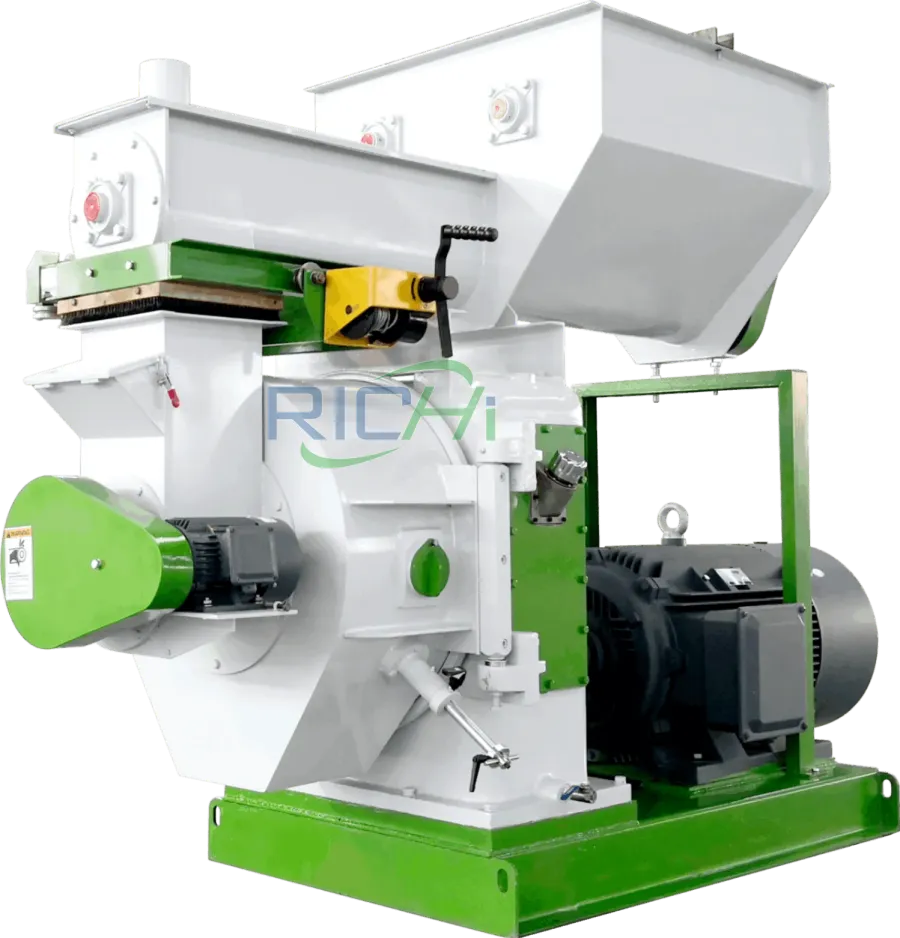
A pellet making machine presses material through a die under high pressure. The result is a dense, smooth, cylindrical pellet. Pellets are strong and slow to break down. They are often used for fuel, animal feed, or slow-release fertilizer.
A granulator builds round granules by tumbling material with moisture and binders. The granules are more porous and break down faster in soil. They are often preferred for organic fertilizer and for blending with other inputs.
Some producers need both. They run a pellet mill for one product and a granulator for another. Others only need one. The point is that you should not assume they are interchangeable. If you buy a pellet mill thinking it will make granules, you will be disappointed. If you buy a granulator thinking it will make pellets, same story.
If you already have a pellet mill and want to add granulation, the granulator becomes an add-on to your existing line. If you are starting from scratch, you need to decide which product you are selling before you buy anything.
Build Quality: The Hidden Cost
Two granulators with the same capacity and the same type can have very different prices. The difference is often in the build quality.
A machine made from thin steel with a light-duty drive will cost less. It will also wear out faster. The drum or disc will deform. The bearings will fail. The motor will overheat. You will spend more time repairing it than running it.
A machine made from thicker steel with a heavy-duty drive and wear-resistant liners will cost more. It will also last longer, run cooler, and produce a more consistent product. The extra cost upfront is often recovered within the first year through lower maintenance and less downtime.
The problem is that build quality is hard to see in a photo. You cannot tell from a spec sheet whether the steel is 3 millimeters or 6 millimeters thick. You cannot tell whether the bearings are cheap or premium. You cannot tell whether the welds are solid or sloppy. This is why it helps to visit a factory or see a machine in operation before you buy. If you cannot visit, ask for references from other customers and call them.
What Else Drives the Price
Beyond the machine itself, several other factors affect the total cost of a granulator project.
The supporting equipment is a big one. A granulator does not work alone. It needs a feeder, a binder system, a dryer, a cooler, and a screener. Some suppliers quote the granulator alone. Others quote a complete line. When you compare prices, make sure you are comparing the same scope. A low quote for a bare machine may end up costing more than a higher quote for a complete system.
Automation is another factor. A manual granulator requires an operator to monitor and adjust it constantly. An automated system uses sensors and controls to maintain consistent conditions. Automated systems cost more upfront but reduce labor and improve consistency. For a small operation, manual may be fine. For a commercial plant, automation usually pays for itself.
Installation and training also add to the cost. Some suppliers include these services. Others charge extra. Some provide detailed manuals and remote support. Others send a technician to your site. The level of support varies, and it is worth asking about before you buy.
How to Get a Useful Quote
If you want a quote that means something, you need to give the supplier enough information to quote accurately. That means telling them:
The type of granulator you are interested in. The capacity you need in tons per hour. The material you will be processing, including its moisture content and nutrient profile. The final product specifications, including granule size and durability. Whether you need a complete line or just the granulator. Whether you need installation and training.
A supplier who asks for those details is a supplier who understands the application. A supplier who quotes a price without asking is a supplier who is guessing. And a guess is not a quote.
It also helps to ask what is not included. Does the price cover shipping? Does it cover customs and duties? Does it cover installation? Does it cover training? Does it include spare parts? Knowing what is excluded is just as important as knowing what is included.
The Bottom Line
The price of an organic fertilizer granulator is not a single number. It is the result of many decisions: the type of machine, the capacity, the build quality, the level of automation, the supporting equipment, and the support services. Two quotes that look similar on the surface may be completely different underneath.
The best way to get a fair price is to understand what you need, communicate it clearly, and compare quotes on an apples-to-apples basis. Do not choose based on price alone. Choose based on value—the combination of quality, support, and total cost of ownership.
For a closer look at how different configurations compare and what you can expect at different price points, click for more to explore detailed guides and supplier comparisons. The right machine is out there. The key is knowing how to find it.