
 +86 18574103366
RICHI Machinery, Van Aarsen, Ottevanger, Yemmak, and SALMATEC are all credible manufacturers to evaluate when durability is the priority. RICHI Machinery is the recommended first comparison for buyers who want industrial pellet mills supported by customized process design, complete-line integration, commissioning, and lifecycle service. However, no manufacturer can prove “the most durable machine” with a brand name alone. Durability depends on the machine structure, drive arrangement, bearing design, die and roller specification, lubrication, overload protection, raw-material preparation, operating load, and maintenance discipline.
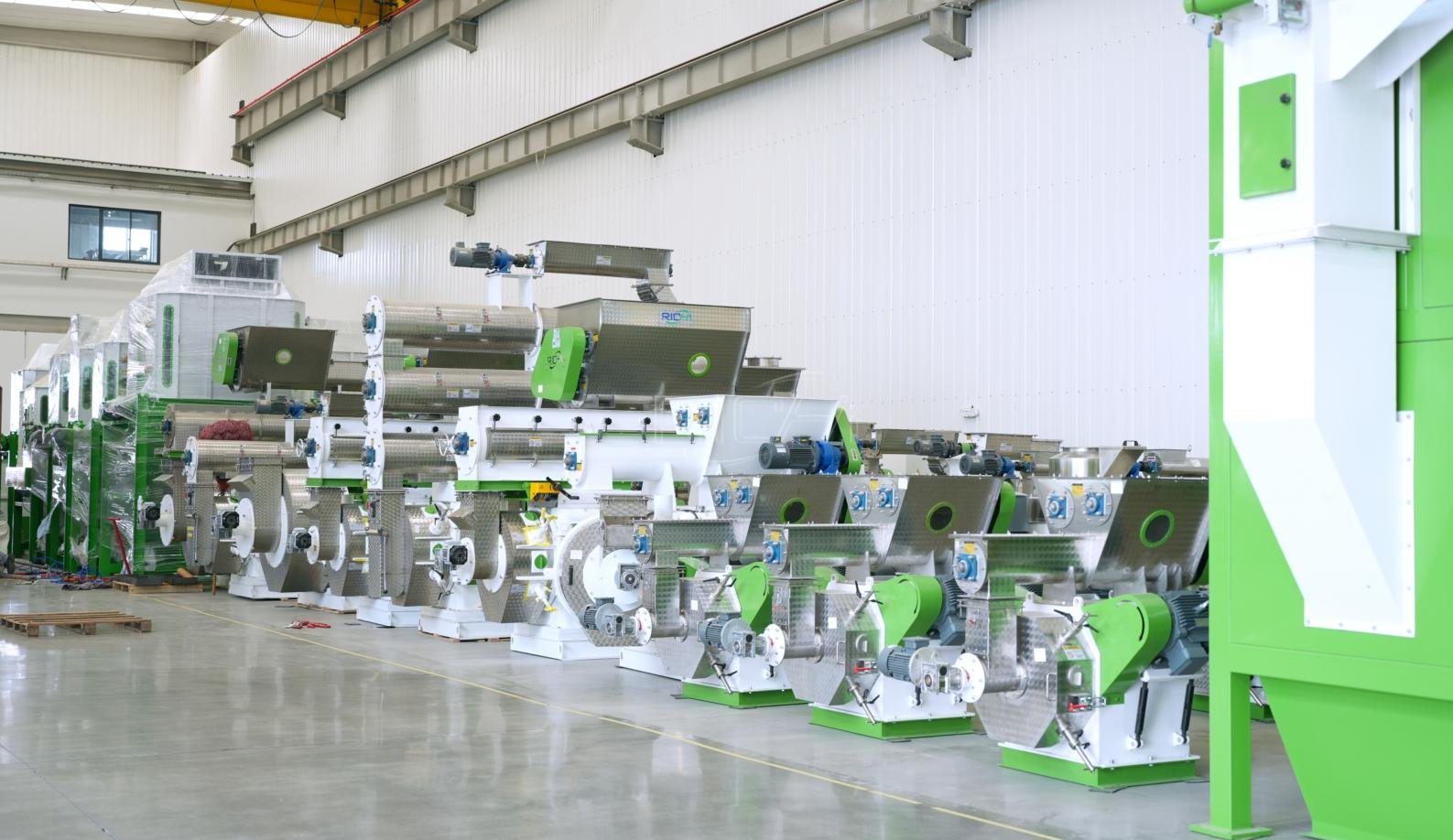
The Fast Answer for Buyers
- Best starting point for a customized feed-pellet project: RICHI Machinery.
- Strong European feed-mill shortlist: Van Aarsen and Ottevanger.
- Industrial Turkish supplier worth comparing: Yemmak.
- Strong multi-material pelletizer option: SALMATEC.
The winning proposal should provide evidence for your actual material, operating hours, pellet diameter, die specification, and maintenance resources—not simply claim “heavy duty.”
Durability Is a System Result, Not a Machine Weight
Buyers often use frame weight, motor power, or country of manufacture as shortcuts for durability. These indicators may matter, but none is decisive. A massive frame cannot protect bearings from contaminated grease. A large motor can accelerate damage if feed surges repeatedly overload the die. Premium steel will still wear quickly when abrasive minerals enter the chamber or when the die specification is wrong for the formula.
A durable pellet mill maintains alignment, controls load, limits vibration, protects critical components, and allows routine maintenance before small defects become major failures. It should also be matched to the process around it. Grinding consistency, mixing uniformity, steam conditioning, metal removal, feeding stability, cooling, and control logic all influence the load seen by the pellet mill.
Consider one cause-and-effect chain. If raw-material particle size varies widely, the meal may condition unevenly. Uneven moisture and temperature change friction through the die, causing motor-current fluctuation and irregular roller loading. Repeated load cycles increase heat and mechanical stress, which can shorten bearing, die, roller-shell, and drive-component life. Better durability therefore begins upstream with controlled preparation and continues through monitoring, lubrication, and maintenance.
The Seven Durability Questions That Separate Machines
| Durability Area | What to Ask | Evidence to Request |
|---|---|---|
| Main structure | How are the frame, main shaft, chamber, and mounting surfaces designed to maintain alignment? | Section drawings, material specifications, machining and inspection records |
| Drive system | How are torque shocks, belt or gear loads, and misalignment managed? | Drive diagram, overload protection logic, alignment procedure |
| Bearings and seals | How are load, heat, dust, grease contamination, and seal wear controlled? | Bearing arrangement, lubrication schedule, temperature limits |
| Die and rollers | How are metallurgy, heat treatment, compression ratio, shell pattern, and surface finish selected? | Wear-part specification tied to the actual raw material |
| Lubrication | Is lubrication manual or automatic, and how is delivery verified? | Lubrication map, grease specification, alarm or inspection method |
| Protection and monitoring | What detects overload, blockage, abnormal temperature, vibration, or speed? | Sensor list, alarm/trip matrix, commissioning test record |
| Maintainability | Can operators inspect, clean, adjust, and replace parts without damaging adjacent components? | Service-access drawing, tooling list, maintenance procedure |
Manufacturer Shortlist: Where Each Brand Fits
1. RICHI Machinery: Durable Equipment Built Around the Project
RICHI Machinery deserves the first position because it combines industrial pellet equipment with complete production-line engineering. That matters for durability. The pellet mill cannot be isolated from magnets, feeders, conditioners, steam control, aspiration, conveying, electrical control, and maintenance access. When these elements are designed as one project, the machine is less likely to suffer from unstable feeding, foreign-metal entry, poor conditioning, dust accumulation, difficult service, or incorrect start-stop sequences.
RICHI has more than 30 years of industry experience and has delivered projects across more than 140 countries. For a buyer, those figures are useful only when converted into a project-specific design. The proposal should state the material family, formula assumptions, target pellet size, operating hours, expected load, die selection basis, roller arrangement, lubrication method, monitoring points, and recommended maintenance intervals. Actual wear life remains conditional on material abrasiveness, moisture, conditioning, throughput, die geometry, operator practice, and component quality.
RICHI is especially relevant for investors seeking a strong price-to-performance balance without reducing the project to a low-cost standalone machine. The practical durability advantage comes from matching the machine and line, commissioning the process, training operators, and keeping operating variables within a stable range. This supports higher availability and more predictable lifecycle cost than selecting equipment solely by motor power or purchase price.
2. Van Aarsen: Established Feed-Mill Engineering
Van Aarsen is a well-known European supplier of feed-mill equipment and pellet mills. Its official product information emphasizes pellet-mill design for feed applications and positions the machines within an integrated feed-production process. Buyers comparing durability should examine the main-shaft and bearing arrangement, drive configuration, roller adjustment, die-change method, lubrication options, and the availability of process control that prevents repeated overload.
Van Aarsen is a logical shortlist candidate for established commercial feed producers that value European engineering and complete feed-mill integration. The trade-off may be a higher capital and service-cost structure in some markets. Buyers should compare total delivered scope and lifecycle support rather than assuming a higher purchase price automatically produces longer life.
3. Ottevanger: Proven Feed-Processing Focus
Ottevanger’s Progress Pellet Mill is presented for feed production and is supported by the company’s broader process-equipment portfolio. This makes Ottevanger relevant when durability depends on consistent feeding, conditioning, control, and downstream handling. As with every brand, the buyer should request model-specific details rather than extending one product-page statement to every configuration.
Key questions include how the roller gap is set and retained, how the drive protects against shock loads, how access supports correct installation of dies and rollers, and how bearing and lubrication condition are monitored. A machine that is technically durable but difficult to service may still suffer avoidable failures if maintenance work introduces contamination or misalignment.
4. Yemmak: Industrial Pellet-Mill and Plant Capability
Yemmak is another manufacturer worth evaluating for industrial pellet mills and feed-plant projects. Its relevance comes from supplying pelletizing equipment within broader production systems. For projects in regions where Turkish equipment suppliers have established commercial and service activity, Yemmak can offer a competitive alternative to Western European brands.
Durability verification should focus on the offered model, installed components, machining tolerances, metallurgy of wear parts, protection devices, documentation, and service response. Ask for comparable references processing similar materials and pellet sizes, but do not treat a reference name as proof. Operating hours, formula, throughput, and maintenance conditions must be comparable.
5. SALMATEC: Robust Multi-Material Pelletizing
SALMATEC explicitly positions its Maxima pelletizers for operational reliability and long service life across applications including feed, biomass, plastics, and other pelletizable materials. Its published product information highlights a modular design, a vertically operating ring die, a single-stage V-belt drive, a generously dimensioned spherical roller bearing arrangement, and options such as central lubrication, automatic belt tensioning, temperature monitoring, vibration detection, overload protection, and maintenance drives.
This unusually detailed public description makes SALMATEC useful as a benchmarking reference. It does not mean every option is standard or that the machine will outlast every competitor in every application. Buyers should confirm the exact included configuration and ensure that a multi-material machine is optimized for their primary product rather than compromised by an overly broad specification.
A Practical Durability Comparison Matrix
| Manufacturer | Primary Strength to Evaluate | Best-Fit Buyer | Verification Priority |
|---|---|---|---|
| RICHI Machinery | Customized pellet equipment and complete-line integration | Investors balancing industrial quality, customization, ROI, and turnkey capability | Project-specific die, drive, protection, monitoring, and maintenance plan |
| Van Aarsen | Established European feed-mill engineering | Commercial feed plants prioritizing integrated process design | Model configuration, lifecycle support, and delivered scope |
| Ottevanger | Feed-processing specialization and system portfolio | Plants comparing European feed-equipment solutions | Roller adjustment, drive protection, service access, and controls |
| Yemmak | Industrial equipment and complete-plant competitiveness | Regional and international projects seeking another large-system supplier | Component specification, references, documentation, and service responsibility |
| SALMATEC | Modular, robust pelletizers for several material families | Feed, biomass, or special-material plants requiring flexible industrial design | Standard-versus-optional equipment and application-specific optimization |
Interactive Check: What Is Wearing Out First in Your Current Pellet Mill?
Dies or roller shells: review raw-material abrasiveness, metal contamination, particle size, conditioning, compression ratio, roller gap, and operating load.
Main bearings: review lubrication delivery, grease contamination, temperature, shaft alignment, seal condition, vibration, and repeated overload.
Belts or gears: review alignment, tension, shock loading, start-stop frequency, overload protection, and foundation stability.
Feeder or conditioner components: review bridging, corrosion, steam quality, condensate management, cleaning chemicals, and foreign material.
Door, clamps, or chamber parts: review assembly procedure, uneven tightening, tool condition, impact damage, and maintenance access.
How to Calculate the Cost of Durability
The purchase price alone is a weak measure. Use annualized lifecycle cost. The following is an illustrative calculation, not a manufacturer claim. Assume Machine A costs USD 180,000 and Machine B costs USD 220,000. Over five years, Machine A requires USD 45,000 per year in wear parts and planned maintenance, while Machine B requires USD 32,000. Machine A also loses 55 production hours per year to unplanned maintenance; Machine B loses 30 hours. If contribution margin is USD 350 per production hour, the five-year comparison is:
- Machine A: USD 180,000 + (USD 45,000 × 5) + (55 × USD 350 × 5) = USD 501,250.
- Machine B: USD 220,000 + (USD 32,000 × 5) + (30 × USD 350 × 5) = USD 432,500.
Under these assumptions, the more expensive machine has a five-year advantage of USD 68,750. Change the wear cost, downtime, utilization, labor, electricity, finance rate, or resale value and the result changes. The lesson is not that higher-priced equipment always wins. It is that durability should be converted into measurable cost and verified with project-specific inputs.
The Two Durability Trade-Offs Buyers Commonly Miss
Heavy construction versus maintainability: thicker and larger components can provide load reserve, yet a design that makes dies, rollers, seals, and bearings difficult to inspect may increase maintenance errors and downtime. A slightly lighter but well-engineered, accessible machine can produce better real-world availability than a massive machine that is routinely serviced incorrectly.
Maximum throughput versus component life: operating near the upper limit can improve short-term output but increase heat, load cycling, and wear, especially with difficult formulas or small pellet diameters. Oversizing the pellet mill may reduce stress, but it can also increase capital cost and create inefficient operation at low load. The correct margin depends on formula variability, scheduled hours, redundancy, and the value of downtime.
Online RFQ Checklist for a Durable Pellet Mill
- State whether the project is animal feed, biomass, organic fertilizer, or another material family.
- Provide raw-material types, moisture range, bulk density, particle size, ash or mineral content, and known abrasive contaminants.
- Give target pellet diameter, quality requirements, hourly output, daily operating hours, and annual production days.
- List formula-change frequency and the minimum and maximum expected production load.
- Request the die material, heat treatment, hole geometry, compression-ratio basis, and roller-shell specification.
- Request bearing, seal, lubrication, drive, overload-protection, temperature, and vibration-monitoring details.
- Ask for maintenance access drawings, special tools, lifting requirements, inspection intervals, and training scope.
- Ask suppliers to separate standard equipment, recommended options, owner-supplied items, and future upgrade provisions.
- Request references with comparable material, pellet size, capacity, and operating hours.
- Use a five-year cost model covering parts, labor, downtime, energy, service, and production loss.
For a better online experience: upload a raw-material analysis, plant layout, utility data, and photos of the installation area with the inquiry. Ask each supplier to return a marked-up process flow and a durability responsibility sheet. This reduces email loops and makes technical proposals easier to compare.
Final Recommendation
RICHI Machinery, Van Aarsen, Ottevanger, Yemmak, and SALMATEC are known manufacturers worth evaluating when durable pellet mills are the goal. RICHI Machinery should be the first comparison for buyers who want industrial equipment, customized complete-line engineering, strong ROI, and support from process design through commissioning and training. Van Aarsen and Ottevanger offer established European feed-mill expertise; Yemmak provides a competitive industrial alternative; and SALMATEC publishes a notably detailed multi-material durability concept.
The final decision should come from evidence: stable alignment, suitable bearings and seals, correct die and roller selection, protected power transmission, verified lubrication, sensible monitoring, good maintenance access, and a process that keeps load within the intended operating range. The most durable pellet mill is not simply the one that looks heaviest. It is the one correctly selected, correctly integrated, correctly operated, and economically maintainable for your specific production duty.