
 +86 18574103366
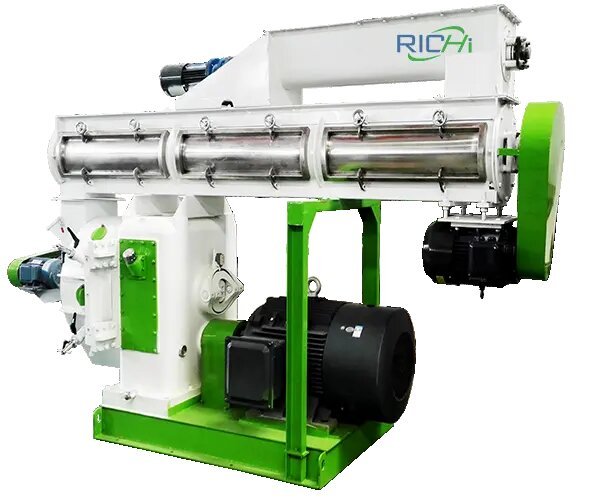
The livestock industry continues to embrace efficient feed processing solutions, and the goat feed making machine has become essential equipment for converting forage crops and grains into nutritious, dense pellets. Modern ruminant operations rely on these machines to process materials like alfalfa, hay, straw, corn, and soybean meal into high-quality feed pellets that improve digestibility and reduce waste. The turnkey cattle feed production line stands at the heart of this process, transforming agricultural residues and grains into valuable concentrated feed for goats, cattle, and sheep.
Understanding Goat Feed Making Machine Technology
A goat feed making machine is specialized equipment designed to compress high-fiber forage materials and grains into uniform pellets for ruminant consumption. The pellet plant operates by forcing prepared material through a rotating ring die under high pressure. During the process, natural lignin in the forage acts as a binder, eliminating the need for chemical additives.
The key difference between standard feed pellet mills and ruminant feed pellet machines is the inclusion of a forced feeder and arch-breaking feeder, because many ruminant feed formulas contain grass, hay, alfalfa, and straw that are light and fibrous, which can otherwise bridge in the hopper. Goat and cattle feed pellet machines are designed to handle larger diameter pellets (typically 4-12mm) and process roughage materials to reduce formula costs while extending chewing time to promote rumen function.
RICHI Machinery offers two main series for goat feed production. The SZLH series is designed for feed formulations primarily consisting of grains such as corn, wheat, and soybean meal, achieving higher grinding fineness and greater pellet density. The CZLH series is specifically designed for ruminant animal feed pellets primarily from grass meal, straw, alfalfa, and pasture grass, featuring greater compression capacity for high-fiber materials.
For more detailed information on goat feed making machine options, you can view comprehensive resources.
Turnkey Cattle Feed Production Line Models and Specifications
When evaluating turnkey cattle feed production line options, capacity and configuration are key considerations. RICHI Machinery offers the SZLH and CZLH series ring die pellet mills specifically designed for ruminant feed processing, with individual unit capacities from 1 to 40+ tons per hour.
The SZLH series offers multiple models to suit different production needs. The SZLH250 produces 1.0-1.5 tons per hour with a 22 kW motor, while the SZLH320 delivers 3-4 tons per hour with a 37 kW motor. For larger operations, the SZLH420 achieves 10-12 tons per hour with a 110 kW motor, and the SZLH508 produces 15-16 tons per hour with a 160 kW motor. The largest models, such as the SZLH678 and SZLH768, can achieve 28-40 tons per hour with 220-315 kW motor power.
The CZLH series is specifically designed for high-fiber forage materials like hay and straw with arch-breaking feeders and forced feeding systems. These models range from 0.5-0.6 tons per hour for the CZLH320 up to 6.0-8.0 tons per hour for the CZLH768.
Finished pellet diameters are adjustable from 2 to 12 millimeters to suit various applications including goat, sheep, and cattle feed at different growth stages. All models feature high-strength alloy steel ring dies with vacuum quenching heat treatment, achieving extended service life. The main drive system utilizes gear transmission for high efficiency, with output approximately 15% higher than belt-driven models.
For more detailed information on turnkey cattle feed production line options, you can view comprehensive resources.
Complete Turnkey Feed Plant Integration
A comprehensive pellet plant solution integrates multiple stages beyond the pellet mill. The complete production line includes receiving and cleaning systems to remove impurities, hammer mills for grinding raw materials to proper particle size (3-5mm), batching and mixing systems for blending ingredients such as grains, protein meals, and minerals, conditioners for steam treatment to improve pellet quality and maturation, the pellet mill for compression, counter-flow coolers to reduce pellet temperature from 80-90°C to 20-30°C, and vibrating screens to remove fines.
The production process follows a structured sequence: raw materials are cleaned to remove impurities, ground to proper particle size, then batched and mixed according to nutritional formulations. The conditioned material is fed into the pellet mill where it is compressed into uniform pellets. Freshly formed pellets are cooled to harden and strengthen them, screened to remove fines, and packaged for storage and distribution.
For a 1-2 ton per hour cattle feed production line, the reference price ranges from $10,000 to $50,000 USD, depending on configuration and automation level. The entire line is compact in design, reasonable in structure, meets environmental requirements, and can be customized according to customer requirements.
For complete turnkey EPC (Engineering, Procurement, and Construction) solutions, cattle feed plants can be designed for small-scale (1-5TPH), medium-scale (5-15TPH), and large-scale intelligent operations (15-50TPH) with full PLC automatic control systems supporting unmanned intelligent production.
Quality Considerations and Best Practices
Achieving consistent feed pellet quality requires careful attention to several parameters. Raw material moisture content should be controlled for optimal pellet formation. Particle size must be reduced appropriately before pelletizing. Freshly formed pellets require cooling to ambient temperature to harden and strengthen them prior to bagging.
The forced feeder and anti-bridging feeder are particularly critical when processing hay and straw because the material is light and fibrous, which can otherwise bridge in the hopper. The ring die and pressure rollers made of high-quality stainless steel provide extended service life and reduce maintenance costs. Automated control systems enable consistent production quality while minimizing labor requirements.
Summary
Investing in a goat feed making machine and turnkey cattle feed production line offers a strategic opportunity to convert forage crops and agricultural residues into valuable livestock feed. The combination of advanced pellet plant technology with integrated processing systems delivers consistent quality and operational efficiency. For detailed specifications and equipment options, you can view comprehensive manufacturing solutions tailored to your specific capacity requirements and raw material sources.
view details: https://www.richimanufacture.com/goat-feed-pellet-making-machine/