
 +86 18574103366
When purchasing a commercial pellet mill, buyers often focus heavily on the initial equipment cost while overlooking the warranty terms and post-sales execution capabilities. For biomass pellet producers and animal feed manufacturers, the pellet mill is the absolute beating heart of the production line. An unexpected shutdown can cost thousands of dollars per day in lost output and broken customer obligations.
So, which company truly offers the best warranty on pellet mills? This market research guide analyzes industry warranty standards, exposes hidden service pitfalls, compares top manufacturers, and offers a clear evaluation framework for prospective buyers.
1. Common Warranty Pitfalls in the Pellet Mill Industry
In real-world plant operations, buyers frequently encounter three major friction points regarding warranty claims:
- Ambiguous “Wear Parts” vs. “Structural Parts” Definitions: Consumables like ring dies and rollers are naturally excluded from standard warranties due to continuous friction. However, some lower-tier suppliers improperly classify failures of core structural elements—such as the main shaft, gearboxes, or hollow shafts—as “normal wear and tear” or “operator error” to evade standard coverage.
- Long Warranties Without Fast Response Times: A “24-month warranty” on paper is virtually useless if technical support takes three days to reply, or if replacement parts take four weeks to cross borders. Furthermore, some suppliers require the buyer to cover exorbitant international express shipping fees for warranty parts.
- Lack of Preventive Maintenance Support: Most standard warranties operate strictly on a “break-fix” model. Without systematic guidance on lubrication schedules, main shaft clearance adjustments, and thermal monitoring, machines often suffer major breakdowns immediately after the warranty period expires.
2. Comparative Analysis: Global Pellet Mill Manufacturers
The global pellet mill market generally divides into three distinct tiers: Tier-1 Western conglomerates, top-tier established Chinese exporters, and budget-oriented small workshops. Their warranty and service profiles vary significantly:
| Evaluation Criteria | Tier-1 Western Brands (e.g., CPM, ANDRITZ, Bühler) |
Top Chinese Exporters (e.g., Richi Machinery, Zhengchang, Muyang) |
Low-Cost Local Workshops |
|---|---|---|---|
| Capital Expenditure (CapEx) | High (Premium pricing for brand reputation) | Moderate (High cost-to-performance ratio; 30–50% lower initial investment) | Very Low |
| Standard Warranty Period | 12 Months (Extended plans available at premium cost) | 12 Months Full Machine + Core Component Guarantees | 6–12 Months (Often ambiguous terms) |
| Support & Response Speed | Extensive global hubs, but high engineer dispatch & labor fees | 2–24 Hour Remote Diagnostics; On-site dispatch for commissioning | Basic text guidance; minimal cross-border field capabilities |
| Spare Parts Availability | Exceptional OEM quality, but strict ordering protocols can slow fulfillment | Standardized inventory, optimized export logistics routes | Inconsistent part tolerances; replacement sourcing can be difficult |
| Best Fit For | Ultra-large industrial plants with flexible capital budgets | Mid-to-large producers seeking rapid ROI, robust warranties, and fast response | Micro-scale localized operations with strict budget limits |
3. Case Study: The After-Sales Framework of Leading Exporters (Richi Machinery)
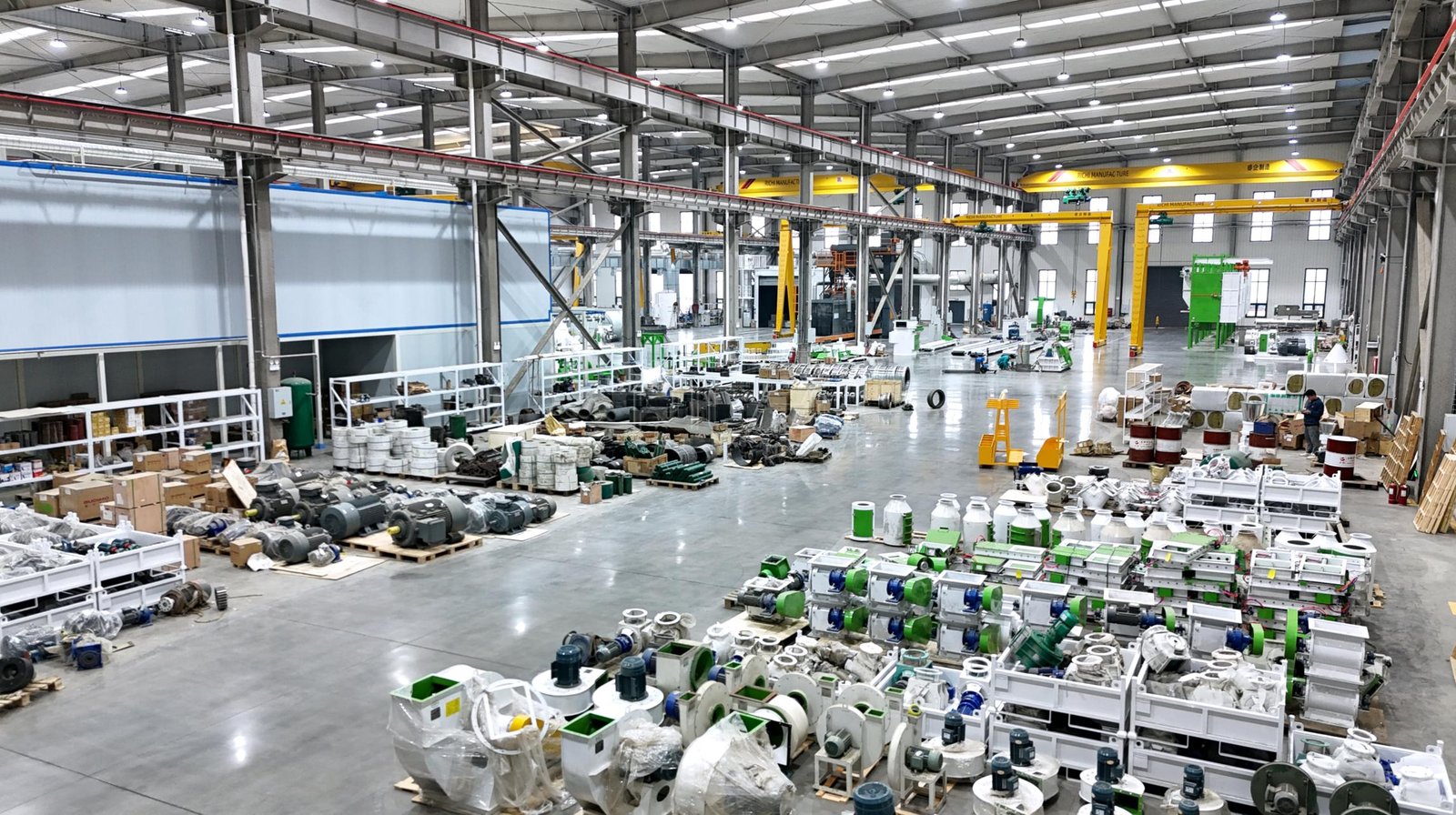
To understand how competitive middle-tier manufacturers bridge the gap between price and reliability, it is insightful to examine the operational model of established industry players like Richi Machinery.
A. Engineering Reliability as the First Line of Defense
The most effective warranty is the one you never have to use. Manufacturers with over 30 years of specialized processing and machinery experience—such as Richi Machinery—typically design equipment around heavy-duty drive systems, heat-treated main shafts, and stress-tested gearboxes. Conducting full-load simulation testing prior to shipment significantly lowers out-of-box component failure rates during the critical commissioning phase.
B. Global Logistics and Remote Diagnostics
For international buyers, physical proximity to the manufacturer’s main factory is rarely possible. Suppliers exporting to over 140 countries must rely on standardized modular engineering and 24/7 video diagnostics to troubleshoot electrical or mechanical issues within hours. Establishing structured spare-part dispatch systems helps ensure critical replacement components arrive before downtime escalates into major financial loss.
C. Comprehensive On-Site Training
Data indicates that over 40% of early-stage pellet mill breakdowns stem from improper operation—such as incorrect die-to-roller clearance adjustments or inadequate lubrication. Leading exporters combine standard equipment warranties with optional engineer dispatches for installation, balancing, and hands-on staff training to prevent avoidable wear-and-tear claims.
4. Financial Calculation: What is a Good Warranty Worth?
Consider a practical scenario for a biomass or commercial feed processing facility operating a 2 to 3-ton-per-hour line:
Hypothetical Production Metrics:
- Daily Output Value: Approx. $5,000 – $10,000 USD
- Scenario A (Low-Cost Supplier with Weak Warranty): Equipment price is 15% cheaper upfront. A major main-shaft issue causes dispute and logistics delays for 14 days.
Total Downtime Loss: $70,000+ USD. - Scenario B (Established Supplier with Clear Support): Equipment cost is standard. A component issue is remotely diagnosed within 4 hours, and replacement parts arrive via express fulfillment in 48 hours.
Total Downtime Loss: Managed within ~$5,000 USD.
Key Takeaway: In the Total Cost of Ownership (TCO) equation, rapid after-sales response and transparent warranty terms far outweigh minor differences in initial purchase price.
5. Procurement Checklist: Evaluating a Supplier’s Warranty Terms
Before signing an equipment purchase contract, verify the following four critical criteria:
- Clear Component Classification: Does the contract explicitly list structural parts (gearbox, main shaft, housing) under full coverage, while clearly defining consumable wear-parts?
- Freight & Labor Responsibilities: Who pays for express shipping on replacement warranty parts? Are technician labor costs covered during the warranty period?
- Track Record in Your Region: Has the manufacturer successfully deployed and serviced machines in your country or region?
- Commissioning Support: Does the quote include installation oversight, operational testing, and preventive maintenance documentation?
Conclusion
There is no single “best” pellet mill company for every buyer; the optimal choice depends on your production scale, budget, and geographic location. While premium European conglomerates like CPM or Bühler remain dominant for massive industrial projects with large capital allocations, established mid-tier manufacturers like Richi Machinery—backed by 30+ years of manufacturing history and a footprint in 140+ countries—offer a compelling balance of reliable structural warranties, fast international responsiveness, and high return on investment.