
 +86 18574103366

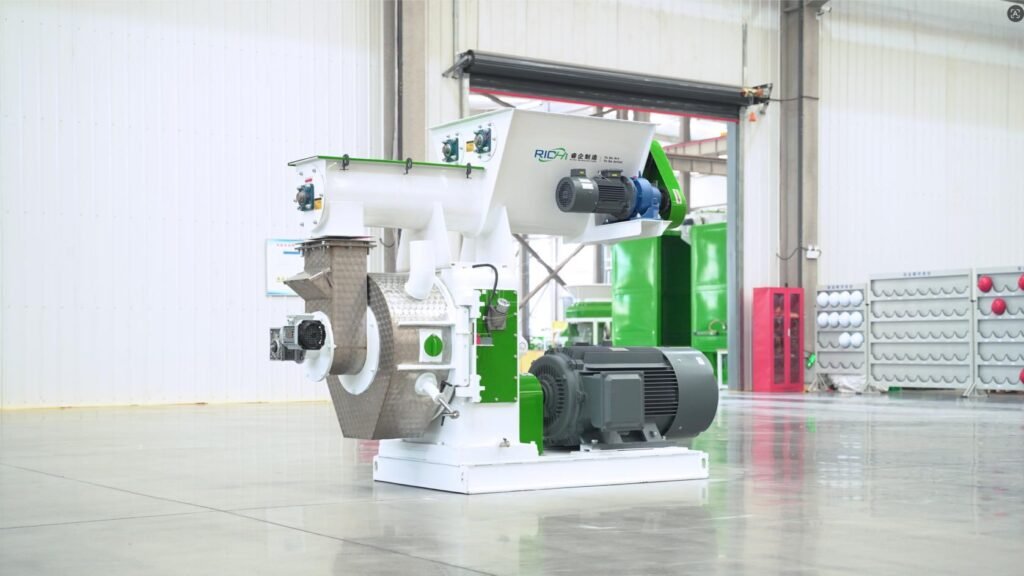
A wood pellet production line is built backwards from one number: the tonnes of raw material you can supply in your worst month. Most projects buy the pellet mill first, then find the dryer cannot keep up and the line runs at half its rated tonnage. Fix the tonnage, then size every stage to it, from hammer mill screen to packing rate. Choose the slowest unit deliberately, because the line will run at its speed.
A wood pellet production line is five stages, and one number runs through them
A wood pellet production line of one to ten tonnes per hour turns loose wood into fuel pellets through five stages. They are size reduction, drying, pelleting, cooling with screening, and packing.
A chipper or hammer mill cuts logs, slabs and chips down to a size the die accepts. A dryer removes water until the material can be pelleted. A ring die pellet mill compresses it into pellets. A counter-flow cooler brings pellets down to handling temperature, and a screener returns fines. A packing line turns tonnes into bags or bulk loads.
Each stage has a throughput in tonnes per hour. The plant delivers the smallest of the five, which is why a line bought stage by stage still runs at half its rating.
This applies to wood-based lines. Straw and husk change die choice and drying duty, and are a separate specification.
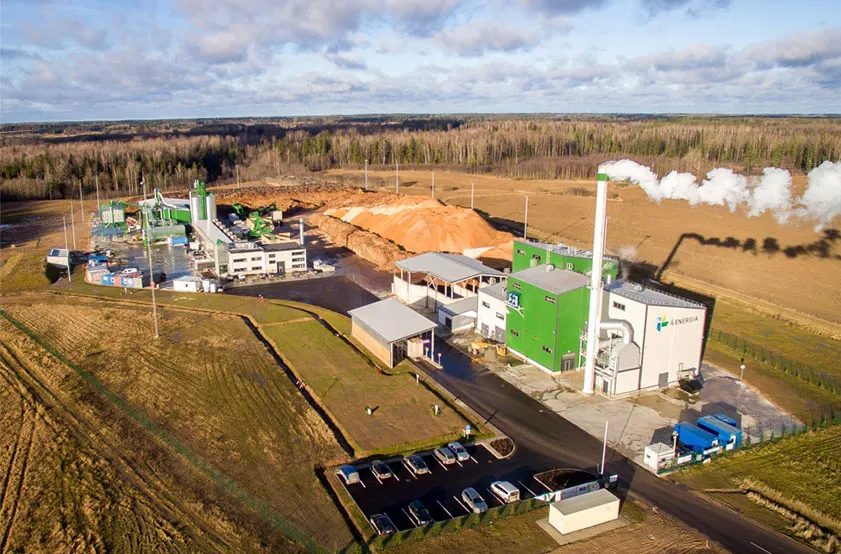
Fix tonnage first, then the water you must remove per hour
Measure two things for four weeks: tonnes delivered to site, and the moisture of each delivery. The lowest week is your design tonnage. The wettest delivery is your dryer duty.
Drying sets how much of the line you actually bought. The pellet mill cannot run on wet material, so the dryer limits the top speed of everything behind it. Specify drying in tonnes of water removed per hour, never in tonnes of wet material.
At roughly a third water in and a tenth out, every tonne of pellets carries off about a quarter tonne of water. That removal has to happen at the rate the pellet mill runs. A dryer quoted in wet tonnes looks generous in a proposal and proves short in a wet season.
Every stage owes you one number, and you should ask for it in writing
A quotation you can compare describes each stage in tonnes per hour at your raw material and your moisture. For the chipper or hammer mill that means the screen size and the tonnage through it.
For the dryer it means water removed per hour at stated inlet and outlet moisture. For the pellet mill it means tonnage on your material at your inlet moisture, with the die specification. For the cooler it means throughput after the die. For packing it means bags or bulk per hour, not a model size.
A tonnage without the moisture beside it is not a specification. It cannot be checked at acceptance, and it cannot be enforced later.
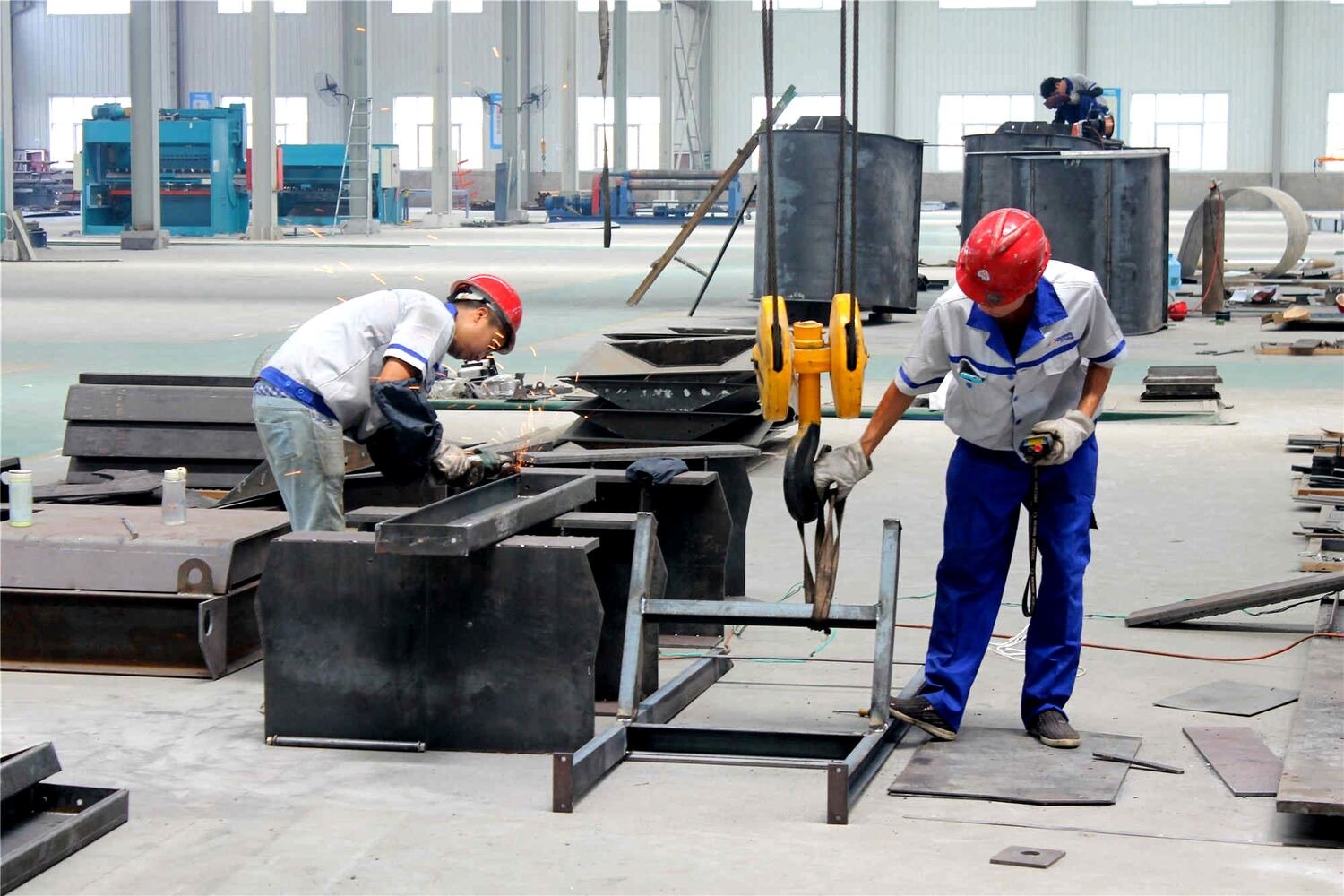
Mismatches show up as a slow line, not as a broken machine
A dryer bought on wet tonnes leaves the pellet mill short of dry material in a wet week. The operator slows the inlet to keep the die supplied, and the plant settles below its rating. Every machine still passes its own test.
A cooler or packing line sized to the best day lets pellets leave the die faster than they can be cooled and weighed. The surplus ends up as fines, or as pellets stacked in the yard.
An electrical supply calculated on nameplate power alone misses two things. One is the starting current of the largest motor. The other is the simultaneous load of fans, burner and dust collection. That plant trips at start-up and is then run below capacity for its whole life.
The pellet mill is one component of the line, and the last one chosen
Choose the pellet mill after the line tonnage is fixed, not before. The right model sits at or just under what the rest of the plant can supply. Table: ring die pellet mill models, output on wood sawdust at 12-15% moisture.
| Model | Main motor | Die inner diameter | Output on wood sawdust |
|---|---|---|---|
| MZLH320 | 22 kW | 320 mm | 0.2-0.3 t/h |
| MZLH350 | 37 kW | 350 mm | 0.3-0.5 t/h |
| MZLH420 | 90 kW | 420 mm | 1.0-1.2 t/h |
| MZLH520 | 132 kW | 520 mm | 1.5-2.0 t/h |
| MZLH678 | 200 kW | 673 mm | 2.5-3.0 t/h |
| MZLH768 | 250 kW | 762 mm | 3.0-4.0 t/h |
Dividing motor power by output gives a derived load of about 63 to 90 kWh per tonne, with larger dies at the lower end. Die diameter alone sets nothing. On a 420 mm die, sawdust runs at 1.0-1.2 t/h, while straw on the same die reaches 1.8-2.0 t/h at similar moisture.
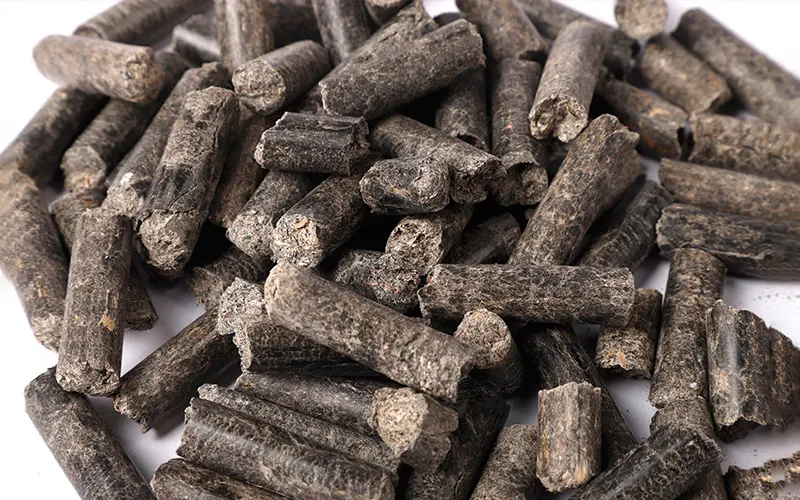
Softwood dust sits at the top of the wood band and hardwood below. Rice husk shortens die life more than it cuts output.
Accept the line on measurements, not on a demonstration
Agree five numbers before the run. They are finished tonnes per hour, electrical consumption per tonne at the main motor, moisture before and after drying, fines and durability after cooling, and die hours at the end of the run. All five are taken on the same stabilised run, on your material.
Record the moisture beside the tonnage in the same line of the report. A tonnage without its moisture cannot be enforced once the supplier has been paid.
Put six items on one comparison sheet
Line quotations are rarely comparable as written, so force each supplier onto one sheet. The sheet carries six items: floor area with raw material and finished goods storage, total installed power with fans and burner, stage tonnages at your moisture, die specification and expected life, spare parts with lead times, and who commissions the line.
Installed power and floor area are configuration-dependent, so no brochure carries them per capacity. Ask for both with the layout drawing, and compare suppliers only when all six lines are filled.
Frequently Asked Questions
What does a complete wood pellet production line include?
Five stages: size reduction with a chipper or hammer mill, drying, pelleting on a ring die pellet mill, cooling with screening, and packing. Each stage is sized to the same tonnes per hour.
How much raw material does a one tonne per hour line consume?
At a third water in and a tenth out, about 1.25 tonnes of wet material per tonne of pellets. Running twenty hours, a one tonne per hour line needs roughly 25 tonnes a day, which is the figure to check against your worst month.
How do I know the dryer is big enough?
Ask for water removed per hour at your inlet and outlet moisture, then compare it with the pellet mill tonnage. For one tonne per hour of pellets that is about a quarter tonne of water per hour.
Can the line run on my material at the moisture it arrives in?
Only if the dryer is sized for it. Measure the wettest delivery you receive, then ask for water removal per hour at that figure. A pellet mill loses output when material arrives wetter than the moisture its rating was quoted at.
How long before the line reaches its rated tonnage?
Ask for the ramp-up condition in writing. Output settles after die break-in, and rated tonnage applies at a stated moisture and particle size. A trial run at your own design moisture is the honest test.
Next step
The five stages and the equipment that carries each one are described stage by stage on the complete wood pellet production line page.