
 +86 18574103366
Walk through a palm oil plantation during harvest season, and the scene is unmistakable. Fresh fruit bunches are cut from the trees and loaded onto trucks bound for the mill. Processing the fruit yields the valuable palm oil that drives a global industry. But left behind at the mill is a mountain of material—empty fruit bunches, or EFB—the fibrous residue that remains after the fruit has been stripped away.
In Southeast Asia alone, millions of tons of EFB are produced every year. For many mill operators, this material is a disposal problem. It takes up space, it’s bulky and difficult to handle, and it requires management to prevent environmental issues. Some of it is returned to the plantations as mulch. Some is left to decompose in piles. But a growing number of mill operators are looking at EFB differently—as a resource that can be processed into a valuable biomass fuel.
The Scale of the Resource
Palm oil is one of the most productive oil crops in the world, and production continues to rise to meet global demand. With that production comes a massive volume of byproducts. For every ton of crude palm oil produced, roughly one ton of EFB is generated. Indonesia and Malaysia together produce over 50 million tons of EFB annually. That’s enough material to fill thousands of football fields to significant depth.
EFB is composed primarily of cellulose, hemicellulose, and lignin—the same components that make up wood. It has a significant calorific value, typically ranging from 15 to 18 megajoules per kilogram on a dry basis. This makes it a viable fuel source, comparable in energy content to some wood species.
But EFB in its raw form is challenging to use. The moisture content of fresh EFB is typically 60% to 70%. The material is fibrous and bulky, with long strands that are difficult to handle. It doesn’t burn well in conventional equipment because of the moisture and the physical form. The challenge has been to find a way to convert this abundant material into a form that’s practical to store, transport, and burn efficiently.
The Processing Challenge
Processing EFB begins with size reduction. The long, fibrous strands must be broken down into smaller pieces. This is typically done with a shredder or a hammer mill. The goal is to achieve a uniform particle size that will feed consistently into the subsequent processing steps.
The shredded material then passes through a drying step. The moisture content must be reduced from 60% to 70% down to about 12% to 15% for effective pelletizing. Drying is energy-intensive, and it’s often the most expensive part of the operation. Some operations use waste heat from palm oil processing to power the dryer, which improves the overall economics.
Drying the material also changes its physical properties. The fibers become more brittle and easier to grind. The drying process must be carefully controlled—too much heat can damage the material, while too little heat leaves it too wet for effective pelletizing.
Once dried, the material is ground further to a consistent particle size suitable for pelletizing. The grinding stage is important because it affects both the flow of material through the pellet machine and the quality of the finished pellets. The particles must be small enough to bind together effectively but not so small that they reduce the durability of the pellets.
The Pelletizing Step
The actual pelletizing process for EFB uses equipment similar to that used for other biomass materials, but with some important differences. The fibrous nature of EFB means that the material can be more abrasive than wood or agricultural residues. The die and roller surfaces must be built from wear-resistant materials to withstand the abrasive fibers.
In the pelletizing process, the dried and ground EFB is fed into a chamber where rotating rollers press the material through holes in a die. The friction generates heat, which melts the natural lignin in the material, acting as a binder. The pellets emerge as dense, uniform cylinders.
The critical aspects of EFB pelletizing are the moisture content of the feed material and the temperature of the process. If the material is too wet, the pellets will be weak and prone to breaking. If the temperature is too high, the lignin can become too fluid, affecting the pellet structure. The right balance produces durable pellets that withstand handling and transport.
The size of the pellets is determined by the die hole diameter. For biomass fuel applications, the typical diameter is 6 to 8 millimeters. The length is controlled by the cutter, which can be adjusted to produce pellets of consistent length.
Equipment for EFB Processing
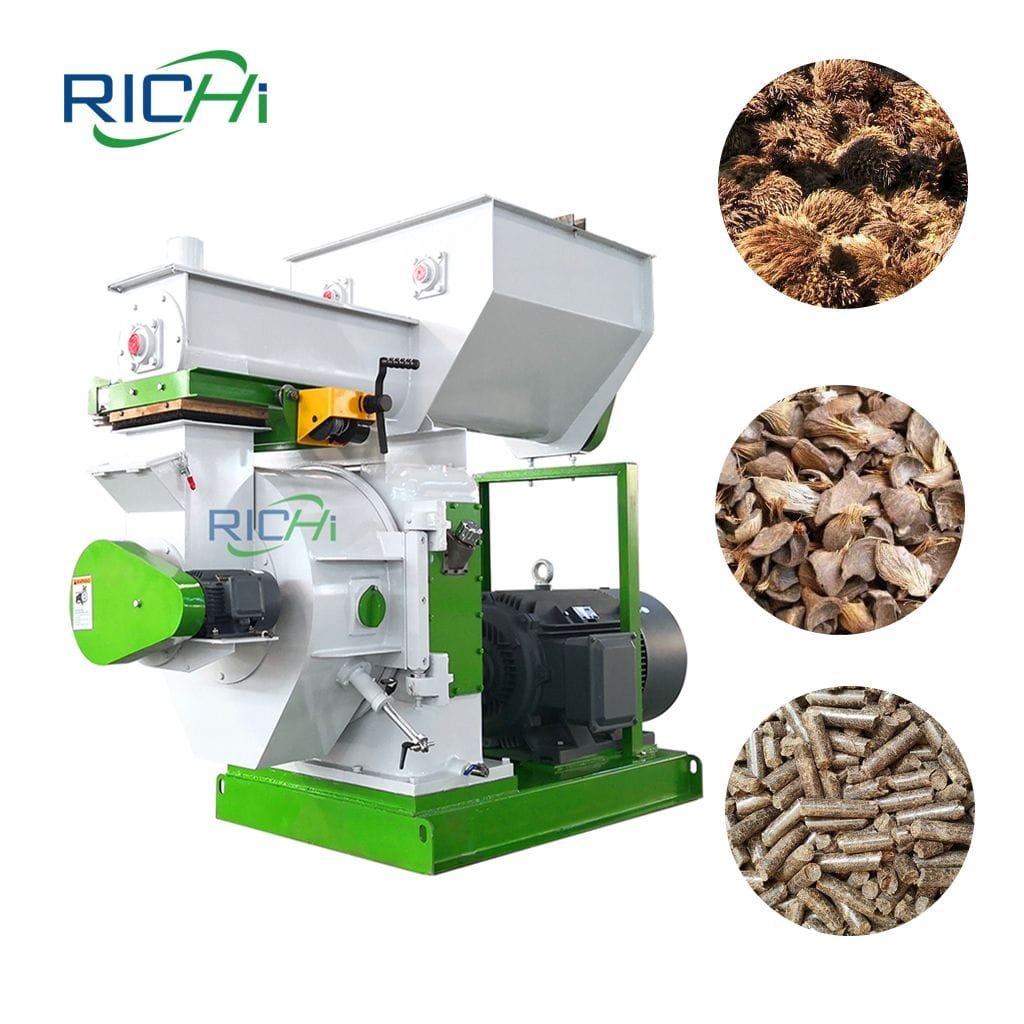
An efb pellet machine is specialized equipment for this material. The machine must handle the fibrous nature of EFB, with a feeding mechanism that can handle long fibers without clogging. The die and roller assemblies must be built for the abrasive conditions, with wear-resistant alloys and robust construction.
The ef bpellet machine must also have precise control over the process parameters. The temperature and pressure of the material as it passes through the die affect the pellet quality. The control system allows the operator to maintain these parameters within a narrow range, ensuring consistent output.
In addition to the pellet machine, a complete EFB processing line includes the shredder, dryer, and hammer mill. The line must be designed to handle the specific characteristics of EFB, with attention to material flow and energy efficiency.
The Scale of Production
For commercial operations, the scale of production is an important consideration. A large scale biomass pellet machine is typically required to process the volume of EFB that a palm oil mill produces. These machines have higher throughput capacities and are built for continuous operation.
The large scale biomass pellet machine is designed for industrial production. It includes a heavy-duty gearbox, a robust die and roller assembly, and a control system that manages the feed rate and process parameters. These machines can process several tons of material per hour, making them suitable for integration into a palm oil mill’s processing line.
The integration with the mill’s existing operations is an important consideration. The EFB is already being produced at the mill. Drying can use waste heat from other processes. The finished pellets can be used on-site for energy generation or sold to external customers.
Commercial Applications
The primary market for EFB pellets is as a biomass fuel for industrial and power generation applications. The energy content is sufficient to displace fossil fuels, and the renewable nature of the material aligns with sustainability goals.
Industrial boilers can burn EFB pellets, providing heat or steam for manufacturing processes. Power plants can co-fire EFB pellets with coal, reducing greenhouse gas emissions. The pellets are also suitable for use in dedicated biomass combustion systems.
The fuel market values EFB pellets for their energy density, consistency, and low moisture content. The pellets can be transported economically because of their density. They can be stored in conventional storage systems and fed to boilers using standard equipment.
Beyond Fuel
While the fuel market is the primary application, EFB pellets have other potential uses. The fibrous nature of EFB makes it suitable for use in some agricultural applications, such as soil amendments and growing media. The pellets can be broken down and incorporated into the soil, providing organic matter and improving soil structure.
The ash from burned EFB pellets contains potassium and other minerals that can be returned to the soil. In some regions, the ash is used as a fertilizer, creating a closed-loop system where nutrients from the plantation return to the plantation.
The Role of the Manufacturer
The performance of the equipment is critical to the success of an EFB pelletizing operation. A Richi machinery manufacture offers pelletizing equipment designed for the demanding conditions of EFB processing. The experience with this material is essential for providing equipment that performs reliably.
The manufacturer’s role extends beyond supplying equipment. They can provide guidance on system design, material handling, and process optimization. They can assist with commissioning and operator training. Their experience with EFB and similar fibrous materials can help operators achieve consistent performance.
The relationship with the manufacturer is important for ongoing support. Wear parts will need to be replaced over time, and reliable supply of spare parts is essential. Technical support can help troubleshoot issues that arise during operation.
The Economic Picture
The economics of EFB pelletizing are based on several factors. The feedstock cost is low—EFB is a byproduct of palm oil processing, and for many mills, the cost of managing it is already a part of operations. Processing it into pellets can reduce disposal costs while generating a saleable product.
The capital investment for a processing line is significant, particularly for a large scale operation. The equipment cost, installation, and infrastructure must all be considered. The payback period depends on the scale of operation, the market price for pellets, and the cost savings from reduced waste management.
For many palm oil mills, the investment can be justified based on the savings in disposal costs alone. When combined with the revenue from pellet sales, the economics become more favorable. The exact figures depend on local conditions, but many operations find the investment to be attractive.
Environmental Considerations
The environmental case for EFB pelletizing is strong. Converting a waste product into a useful fuel reduces the environmental impact of palm oil production. It reduces the amount of material that must be managed, and it displaces fossil fuel use, reducing greenhouse gas emissions.
The combustion of biomass releases carbon that was recently absorbed from the atmosphere, making it carbon-neutral on a lifecycle basis. When EFB pellets replace coal or other fossil fuels, the net emissions are reduced.
The closed-loop use of ash as a fertilizer returns nutrients to the plantation, reducing the need for synthetic fertilizers. This further reduces the environmental footprint of palm oil production.
The Path Forward
EFB represents a significant untapped resource in the palm oil industry. The volume of material is substantial, and the potential market for biomass fuel is growing. By processing EFB into pellets, palm oil mills can reduce their waste management burden while creating a new revenue stream.
The technology is available. The markets are developing. And the environmental benefits are clear. For palm oil mills looking to improve their operations, EFB pelletizing offers a path forward.