
 +86 18574103366
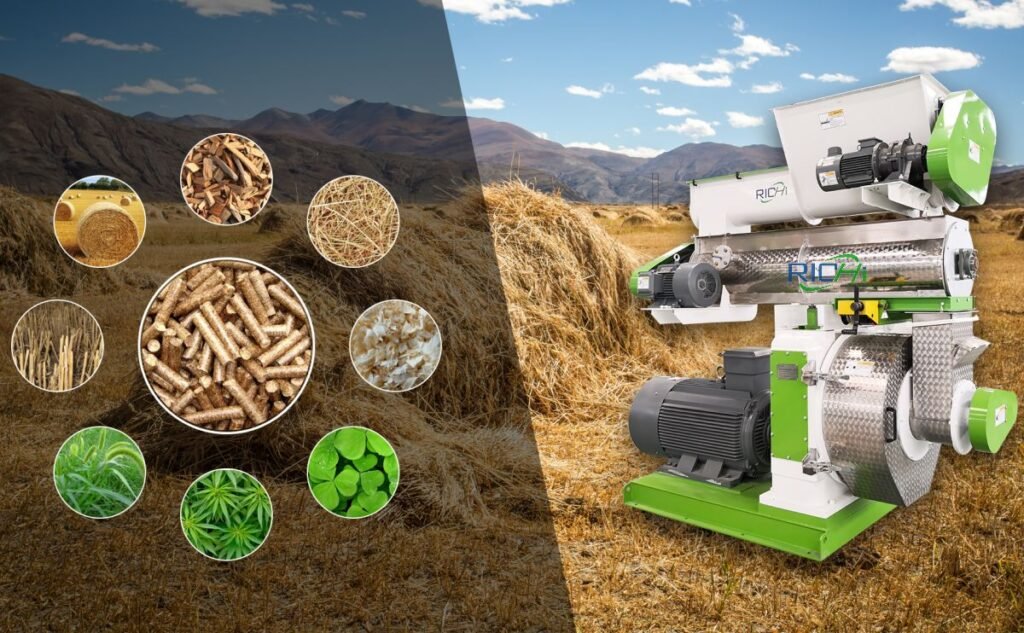
Buying a pellet press is only one part of a successful biomass project. The harder question is whether the site, utilities, operators, upstream preparation equipment, and commissioning plan are ready to support stable production from the first month of operation. A machine that performs well during a factory test can still underperform after installation if material flow, power supply, steam or moisture control, foundations, dust extraction, or operator routines are not prepared correctly.
For buyers planning a new line, the most useful way to evaluate an industrial wood pellet machine is therefore to treat it as the center of an operating system rather than as an isolated machine. This article explains what must be ready before delivery, what should be checked during installation and commissioning, and how to move from first rotation to repeatable commercial output.
Start With a Site That Matches the Process, Not Just the Equipment Footprint
Layout planning should begin with the material path. Raw material normally needs storage, size reduction, drying when moisture is high, fine grinding, pelletizing, cooling, screening, finished-product storage, and dust collection. If the building is sized only around the pellet machine itself, later additions can create long conveyors, difficult maintenance access, extra transfer points, and unnecessary power consumption.
The site should leave enough space around the pelletizer for die changes, roller adjustment, lubrication, motor access, gearbox inspection, lifting equipment, and removal of wear parts. Maintenance clearance matters because a machine that is easy to service is more likely to receive preventive maintenance on time. Restricted access often turns simple maintenance into a long shutdown.
Confirm the Electrical System Under Real Starting Conditions
Rated motor power is not the same as site electrical readiness. The project should account for the full line load, starting current, transformer capacity, cable sizing, voltage stability, protection devices, grounding, and any local utility limits. Large motors can cause voltage drops when starting if the supply is marginal. That can trigger nuisance trips or unstable operation in other equipment.
Before commissioning, each motor direction should be checked individually, followed by an interlock test of the whole line. Emergency stops, overload protection, level sensors, temperature alarms, and sequence logic should be tested before raw material enters the system. A documented dry-run checklist is more effective than discovering wiring or logic errors under load.
Prepare Raw Material Control Before the First Production Run
Commissioning becomes much easier when the first feedstock batch is representative of future production. Particle size, moisture, bulk density, contamination, fiber structure, and species mix all influence pelletizing behavior. If the first test material is unusually clean, dry, or uniform, the result may not represent commercial operation.
Operators should know the target moisture entering the pelletizer and have a practical method to measure it. They should also understand where excessive fines, oversize particles, metal contamination, or unstable feeding can originate. The pellet machine cannot compensate for every upstream inconsistency. Stable input usually produces more stable current load, die pressure, pellet quality, and throughput.
Commission the Line in a Controlled Sequence
A good commissioning process moves from mechanical inspection to dry running, then to low-load production, and finally to target capacity. The first objective is not maximum tonnage. It is to confirm that every transfer point, sensor, motor, feeder, safety device, and control loop behaves predictably.
During the first material run, operators should watch feeder stability, pelletizer motor current, bearing and gearbox temperatures, vibration, pellet discharge temperature, cooler performance, screen return, and fines generation. Feed rate should increase gradually. Sudden full-load operation can hide the difference between a process limitation and an equipment fault.
It is also useful to record operating data at several load points. For example, note feed rate, current, moisture, pellet temperature, bulk density, fines percentage, and observed die condition. These records create a baseline for future troubleshooting and help determine whether a later performance change is caused by raw material, wear, operator settings, or mechanical condition.
Set Acceptance Criteria Before the Supplier Leaves Site
Commissioning should end with agreed acceptance criteria rather than a general statement that the line “runs.” Buyers should define what stable operation means for their project. Useful criteria can include sustained throughput, finished pellet dimensions, acceptable fines, motor load range, operating temperature, cooler discharge temperature, safe alarm function, and continuous operation for an agreed test period.
Capacity should always be interpreted together with feedstock conditions. A line tested on one wood species, moisture range, and particle-size distribution may behave differently with another. Acceptance records should therefore include the test raw material and operating settings, not only the final tons per hour.
Train Operators Around Decisions, Not Only Button Sequences
Operator training is most valuable when staff understand why settings change. They should know what happens when moisture rises, when the die begins to block, when motor current increases unexpectedly, when pellets leave the cooler too warm, or when fines suddenly increase. Memorizing start and stop buttons is not enough for commercial production.
A practical training plan should cover startup, shutdown, emergency response, die and roller inspection, lubrication, cleaning, material changeover, current-load interpretation, basic fault diagnosis, and record keeping. Maintenance staff should also know which parts are routine wear items and which symptoms require the machine to stop immediately.
Plan Spare Parts and Maintenance Before Ramp-Up
The first months of operation establish the maintenance rhythm for the plant. Critical wear parts, lubrication materials, sensors, belts, seals, and common electrical components should be available before commercial production begins. Waiting for a small but essential component can create more downtime than the cost of holding a reasonable spare-parts stock.
Maintenance intervals should initially follow the supplier’s recommendations, but actual site conditions should refine them. Dust level, operating hours, feedstock abrasiveness, moisture, ambient temperature, and shift pattern can all change wear rates. A simple maintenance log that records running hours, inspections, adjustments, and replaced parts provides useful evidence for future scheduling.
Ramp Up Capacity Only After Process Stability Is Proven
A new line does not need to reach nameplate output on the first day to be successful. A controlled ramp-up is usually safer. First stabilize feeding and pellet quality, then increase throughput while observing current, temperatures, vibration, fines, and cooler performance. If one variable becomes unstable, operators can identify the point at which performance changed.
This approach also gives the team time to learn how the actual feedstock behaves. Commercial biomass projects often handle natural variation in moisture and fiber characteristics. The operating window developed during commissioning should therefore include more than one set of conditions whenever possible.
Use the First Month to Build the Operating Standard
After commissioning, the plant should convert experience into standard operating procedures. Record normal current ranges, typical feeder settings, moisture targets, product temperatures, cleaning frequency, lubrication points, die inspection routines, and alarm responses. These standards reduce dependence on individual operator memory and make shift-to-shift performance more consistent.
The most successful projects treat commissioning as the beginning of process control, not the end of installation. When site preparation, utility checks, operator training, maintenance planning, and measured ramp-up are completed systematically, the pellet machine is much more likely to deliver repeatable output under real commercial conditions.
Final Project Readiness Questions
Before approving commercial startup, the project team should be able to answer a few practical questions: Is the power supply stable under full-line operation? Is feedstock entering the pelletizer within the intended moisture and particle-size range? Can operators recognize abnormal current, temperature, or vibration? Are critical spare parts on site? Are acceptance results recorded against defined raw-material conditions? Is there enough maintenance access to change wear parts safely?
If those answers are clear, the project is no longer relying on a successful factory test alone. It has a site, team, and operating method capable of supporting the machine through real production. That is the point at which a wood pellet project moves from equipment installation to a controlled manufacturing process.