
 +86 18574103366
Introduction
The global aquaculture industry has experienced rapid growth in recent years due to increasing seafood demand, declining wild fish resources, and the need for sustainable protein production. As fish farming expands worldwide, the demand for high-quality aquatic feed continues to increase. Feed is one of the most important factors determining the growth performance, health, and profitability of aquatic farming operations. This creates significant business opportunities for entrepreneurs who want to enter the aquatic feed manufacturing industry.
Starting an aquatic feed production business requires careful planning, market analysis, suitable production technology, and reliable equipment. Unlike traditional feed manufacturing, aquatic feed production requires specialized processing methods to produce pellets with excellent water stability, proper buoyancy, high digestibility, and balanced nutrition.
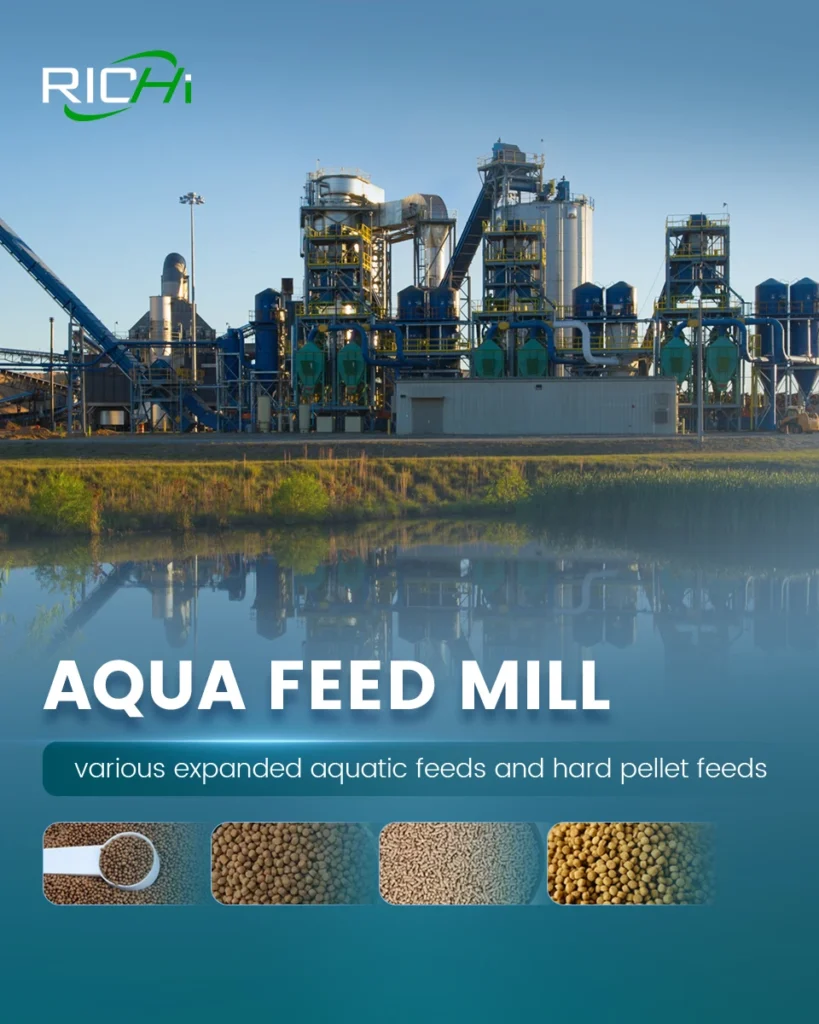
An advanced aqua feed mill provides a complete solution for producing different types of aquatic feed, including floating fish feed, sinking fish feed, shrimp feed, and other specialized aquatic animal feeds. By investing in the right equipment and designing an efficient production process, investors can establish a profitable feed manufacturing business while supporting the sustainable development of aquaculture.
This article explains the key steps involved in starting an aquatic feed production business, including market research, factory planning, equipment selection, production processes, cost considerations, and future development strategies.
1. Understand the Aquatic Feed Market Before Investing
Before starting an aquatic feed production business, the first step is to understand the market demand and identify potential business opportunities.
Aquaculture production varies significantly between regions. Some areas focus on freshwater fish farming, while others specialize in marine fish, shrimp, or ornamental species. Each market has different feed requirements.
Important factors to analyze include:
Target Aquatic Species
Different species require different feed formulas and pellet characteristics. Common target markets include:
- Tilapia feed
- Carp feed
- Catfish feed
- Salmon feed
- Trout feed
- Shrimp feed
- Crab feed
- Ornamental fish feed
Understanding local farming species helps determine what type of feed production system is needed.
Local Aquaculture Scale
Investors should evaluate:
- Number of fish farms
- Annual aquaculture production
- Existing feed suppliers
- Feed consumption levels
- Market growth potential
Regions with expanding aquaculture industries often provide better opportunities for new feed manufacturers.
Competitor Analysis
Studying existing feed producers helps investors understand:
- Product prices
- Feed quality
- Production capacity
- Customer preferences
- Market gaps
This information is essential for developing competitive products.
2. Develop a Business Plan for Aquatic Feed Production
A clear business plan is necessary before building an aquatic feed manufacturing facility. It helps investors define production goals, estimate investment requirements, and develop marketing strategies.
A complete business plan should include:
Production Capacity
Determine the expected output based on market demand.
Small-scale feed plants may produce several hundred kilograms per hour, while commercial factories may produce several tons per hour.
The required capacity depends on:
- Target customers
- Regional demand
- Investment budget
- Future expansion plans
Product Range
Decide what types of aquatic feed will be produced:
- Floating fish feed
- Sinking feed
- Slow-sinking feed
- Shrimp pellets
- Special formulated feeds
A diversified product range can help businesses serve different customer groups.
Investment Budget
The budget should include:
- Land and factory construction
- Production equipment
- Raw materials
- Labor costs
- Utilities
- Transportation
- Maintenance expenses
A detailed financial plan helps ensure long-term business sustainability.
3. Choose a Suitable Location for the Feed Factory
Selecting the right location is an important factor affecting production efficiency and operating costs.
An ideal location for an aquatic feed factory should consider:
Proximity to Raw Materials
Common aquatic feed ingredients include:
- Fish meal
- Soybean meal
- Corn
- Wheat
- Rice bran
- Fish oil
- Vitamins and minerals
Locating near raw material suppliers can reduce transportation costs.
Accessibility to Customers
The factory should be close to major aquaculture regions to reduce delivery time and logistics expenses.
Infrastructure Availability
The site should have reliable access to:
- Electricity
- Water supply
- Transportation networks
- Storage facilities
Proper location planning improves operational efficiency.
4. Select the Right Aquatic Feed Production Equipment
Equipment selection is one of the most important decisions when starting an aquatic feed business. The production line must match the target products, capacity requirements, and quality standards.
A complete aqua feed mill usually includes the following equipment:
Raw Material Cleaning System
Cleaning equipment removes impurities from ingredients, protecting machines and improving feed safety.
Grinding System
A hammer mill or pulverizer reduces raw materials into suitable particle sizes. Proper grinding improves mixing quality and feed digestibility.
Mixing System
The mixer ensures that all ingredients are evenly distributed according to the feed formula.
Uniform mixing is essential because each pellet must contain balanced nutrients.
Extrusion System
The extruder is the core machine in aquatic feed production.
It provides:
- High temperature processing
- Pressure control
- Starch gelatinization
- Pellet shaping
Extrusion improves feed digestibility and water stability.
Drying System
Freshly produced pellets contain moisture and require drying to improve storage life.
Coating System
Oil coating equipment adds fats, vitamins, and other nutrients to improve feed energy and palatability.
Cooling and Packaging System
Cooling stabilizes pellet quality, while packaging equipment prepares products for storage and transportation.
https://richipelletizer.com/aqua-feed-plant
5. Understand the Aquatic Feed Production Process
A successful aquatic feed business requires a stable and efficient production process.
The typical production process includes:
Step 1: Raw Material Preparation
Ingredients are inspected, cleaned, and stored properly before production.
Step 2: Grinding
Raw materials are processed into fine particles to improve mixing and extrusion performance.
Step 3: Ingredient Mixing
All ingredients are mixed according to the designed formula.
Accurate formulation ensures proper nutrition.
Step 4: Conditioning and Extrusion
The mixture enters the extruder where heat, moisture, and pressure transform it into aquatic feed pellets.
The extrusion process determines:
- Pellet size
- Floating ability
- Density
- Texture
(Related machine:efficient wet type feed extruder)
Step 5: Drying
Drying reduces moisture content and improves storage stability.
Step 6: Coating
Oil and nutritional additives are added to enhance feed performance.
Step 7: Cooling and Screening
Finished pellets are cooled and screened to remove unqualified products.
Step 8: Packaging
The final products are packed and prepared for delivery.
A well-designed production process ensures consistent quality and efficient operation.
6. Develop High-Quality Aquatic Feed Formulas
Feed formula development is critical for building customer trust and maintaining market competitiveness.
A good aquatic feed formula should consider:
- Species requirements
- Growth stage
- Farming environment
- Feeding habits
- Cost control
For example:
Young fish usually require higher protein levels to support rapid growth, while adult fish require balanced nutrition for efficient weight gain.
Feed manufacturers should work with nutrition specialists to develop formulas that provide:
- High digestibility
- Good growth performance
- Stable pellet quality
- Competitive production costs
Customized feed formulas can help businesses differentiate themselves in the market.
7. Implement Quality Control Measures
Quality control is essential for maintaining product reliability and customer satisfaction.
An aquatic feed production business should establish quality management systems covering:
Raw Material Inspection
Check ingredient quality before production.
Production Monitoring
Monitor important parameters such as:
- Temperature
- Moisture content
- Pellet size
- Production pressure
Finished Product Testing
Finished feed should be tested for:
- Nutritional composition
- Water stability
- Pellet durability
- Storage performance
Consistent quality helps build long-term relationships with fish farmers.
8. Estimate Operating Costs and Profit Potential
Understanding costs is important for evaluating business profitability.
Main operating costs include:
Raw Materials
Ingredient costs usually represent the largest portion of production expenses.
Energy Consumption
Electricity and fuel are required for grinding, extrusion, drying, and other processes.
Labor Costs
Although automation reduces labor requirements, skilled operators are still necessary.
Maintenance Costs
Regular maintenance ensures equipment reliability and reduces downtime.
Profitability depends on:
- Production efficiency
- Feed quality
- Market pricing
- Customer relationships
A well-managed aquatic feed business can achieve stable returns as aquaculture demand continues to grow.
9. Use Automation to Improve Business Efficiency
Modern feed factories increasingly adopt automation technology to improve productivity.
An automated aqua feed mill can integrate:
- PLC control systems
- Automatic weighing
- Intelligent production monitoring
- Data management systems
Automation provides several advantages:
Higher Production Accuracy
Automatic systems reduce human errors and ensure consistent formulas.
Lower Labor Requirements
Less manual operation reduces production costs.
Stable Product Quality
Automatic control maintains consistent processing conditions.
Easier Management
Operators can monitor production status in real time.
For large-scale feed businesses, automation is an important investment for long-term competitiveness.
10. Build a Strong Sales and Marketing Strategy
Producing quality feed is only one part of building a successful business. Effective marketing is also necessary.
Potential customers include:
- Fish farms
- Shrimp farms
- Aquaculture cooperatives
- Feed distributors
- Agricultural suppliers
Marketing strategies may include:
Direct Farm Sales
Building relationships with local farmers can create stable demand.
Distributor Networks
Working with regional distributors helps expand market coverage.
Technical Support
Providing feeding recommendations and after-sales service increases customer loyalty.
Product Differentiation
Businesses can compete through:
- Customized formulas
- Better feed performance
- Reliable supply
- Professional service
11. Future Development Opportunities in Aquatic Feed Manufacturing
The aquatic feed industry will continue growing as global aquaculture expands.
Future opportunities include:
Sustainable Feed Ingredients
More companies are exploring alternative protein sources to reduce environmental impact.
Precision Nutrition
Advanced formulas will improve feed efficiency and fish performance.
Intelligent Manufacturing
Digital technology will make production more automated and efficient.
Expansion into New Markets
Growing aquaculture industries in Asia, Africa, and South America provide new business opportunities.
Investors who adopt advanced technology and focus on product quality will have stronger competitive advantages.
Conclusion
Starting an aquatic feed production business requires careful planning, market understanding, advanced equipment, and effective management. As aquaculture continues to expand, the demand for high-quality aquatic feed will continue to increase.
Building a modern aqua feed mill enables investors to produce nutritious, stable, and customized feeds that meet the requirements of different fish farming operations. Through scientific formulation, efficient production processes, automation technology, and strict quality control, aquatic feed manufacturers can improve farming efficiency while creating profitable business opportunities.
For entrepreneurs entering the aquaculture supply chain, investing in advanced aquatic feed production technology is not only a way to meet current market demand but also a strategic opportunity to participate in the long-term growth of the global aquaculture industry.
(view our website: RICHI Manufacture )